July 2026 — Two leading HVAC trade organizations, the Air‑Conditioning, Heating, and Refrigeration Institute (AHRI) and North American Technician Excellence (NATE), this week released an interim update on their national Heat‑Pump Installer Quality Program pilot. The update — covering activity from the pilot launch in May 2026 through late June — reports early performance metrics, broader utility and manufacturer participation, and practical guidance for contractors seeking to qualify for faster incentives and fewer call‑backs.
Context: why the program matters now
Electrification targets and utility rebate programs have accelerated across the United States: state and utility plans now project millions of residential heat‑pump installations this decade. Persistent problems — improper refrigerant charge, inadequate airflow, and misconfigured controls — have repeatedly reduced real‑world savings versus modeled forecasts. AHRI and NATE launched the Quality Program in April 2026 to create a common commissioning checklist, a modular installer credential, and a standardized paperwork/interoperability framework intended to raise first‑year performance and speed incentive processing.
What’s new in July 2026
AHRI and NATE published an interim pilot report on July 1, 2026, summarizing five key developments:
- Expanded sponsor list: The pilot — originally described as including utilities in California, New York and Minnesota — now lists Pacific Gas & Electric (PG&E), Consolidated Edison (Con Edison), Xcel Energy and the New York State Energy Research and Development Authority (NYSERDA) as active participants for specific rebate tracks.
- Contractor and technician uptake: The organizations report 1,300 contractor firms enrolled as “Quality Program Partners” and 5,100 technicians registered for the new credential pathway as of June 30, 2026.
- Early field metrics: Participating utilities report average incentive approval times falling from an average of roughly 38–45 days to 9–12 days for submissions using the QR‑tagged documentation package and the digital portal. Hands‑on assessment first‑pass rates averaged 72% across approved test centers.
- Performance signals: In preliminary post‑installation monitoring (sites with 30‑ to 60‑day data), utilities saw a 22% reduction in documented performance shortfalls relative to non‑pilot installs admitted through conventional rebate channels. Early callback rates for participating installers fell by about 26% compared with a matched control group, the report states.
- Manufacturer support: Manufacturers including Daikin, Mitsubishi Electric and Carrier have supplied factory test rigs and training seats at eight regional centers to support hands‑on assessments.
Details: how the pilot is working in the field
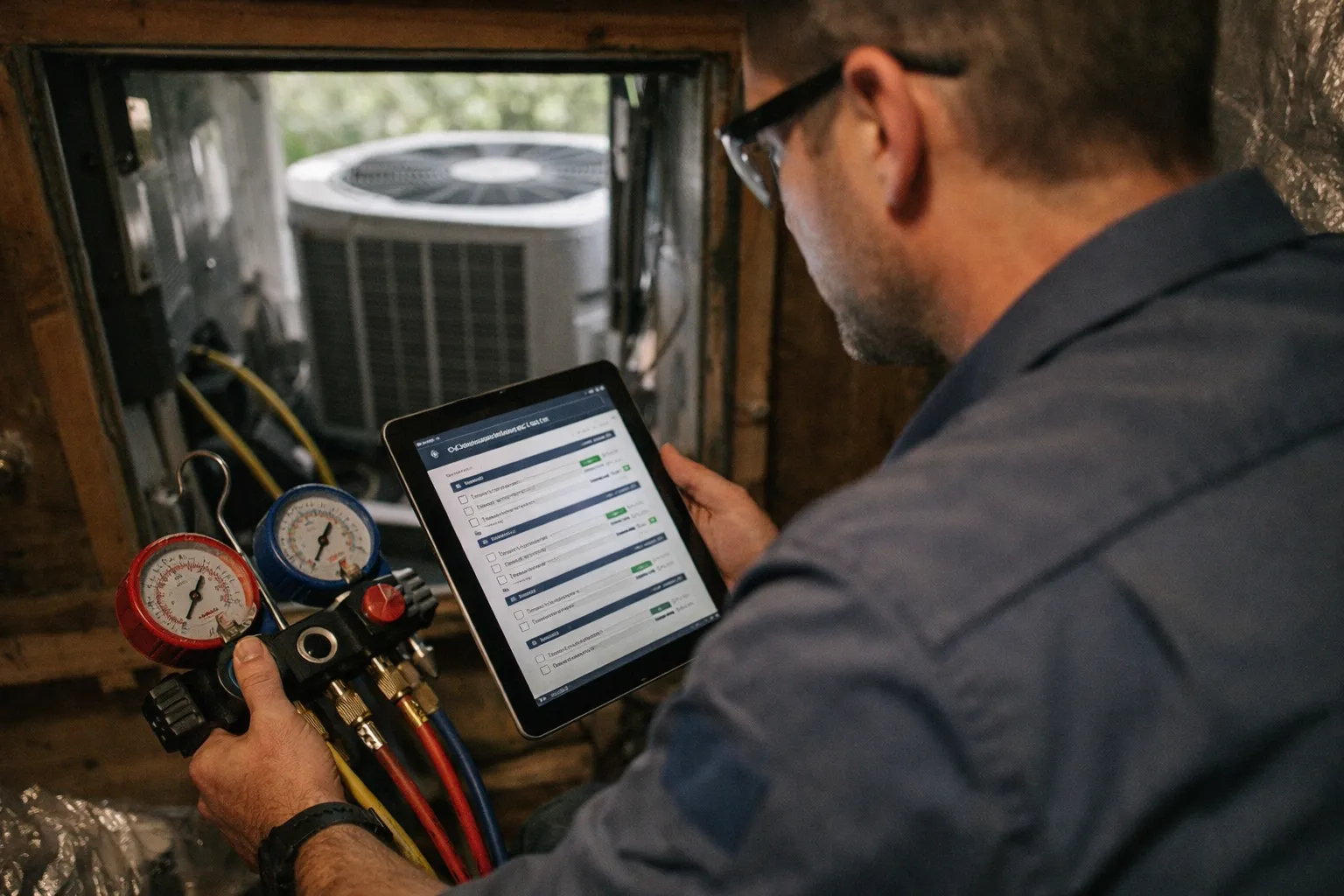
The program retains the three original elements — a standardized commissioning checklist, modular installer credentialing with periodic proficiency testing, and an incentive interoperability framework — but the July update adds operational specifics. Participating contractors now use a digital commissioning form that captures signed readings for airflow (CFM), measured refrigerant charge (weigh‑in or pressure/temperature diagnostics), superheat/subcooling targets, defrost cycles and a 15‑minute logged performance run at ambient temperatures. Each completed form is QR‑tagged and submitted through the AHRI/NATE portal to the sponsoring utility.
Hands‑on credential assessments require a technician to perform a full commissioning sequence on a factory‑calibrated rig or a live field installation observed by an approved proctor. Credential renewal mandates a minimum number of recent heat‑pump installs and a short proficiency retest every 24 months.
Impact: who benefits and how
Utilities: Faster rebate processing and fewer rejected applications. The interim report projects administrative savings equal to approximately 12–18 staff hours per 1,000 applications due to standardized, machine‑readable documentation.
Contractors: Quicker payments on incentive projects (averaging a 60–75% reduction in time to payment for pilot participants), lower callback rates and a clearer marketing differentiation for electrification work. Early adopter contractors in Minnesota and northern New York told AHRI/NATE that credentialed crews closed more bids where customers prioritized verified performance.
Customers: Better likelihood that installed systems deliver modeled energy savings and greater warranty reliability, according to manufacturer partners who cite reduced installation‑error warranty claims at participating dealers.
Reactions from the field
"Standardizing what we measure and how we submit it removes a huge administrative headache. We’re seeing faster approvals and fewer returns for paperwork," said a program manager at a mid‑Atlantic utility participating in the pilot (statement provided to HVAC System Guide).
A small sample of contractor feedback included praise for the hands‑on training but concerns about scaling proctored assessments in rural markets. AHRI and NATE acknowledged that geographic access to approved test centers remains a constraint and said they are piloting remote, manufacturer‑verified field assessments to increase reach.
What this means for technicians and contractors today
If you’re a contractor or technician working on heat‑pump installs, take these near‑term steps:
- Enroll as a Quality Program Partner if you plan to bid on utility‑incentivized projects in participating territories (PG&E, Con Edison, Xcel and NYSERDA tracks are active in the pilot).
- Adopt the digital commissioning form and integrate it into your post‑install workflow; include photos, recorded airflow and charge measurements, and the QR tag on the final paperwork.
- Prioritize training modules for cold‑climate operation and control‑sequence validation; hands‑on assessment capacity is currently the principal bottleneck for credential issuance.
- Keep time‑stamped data logs for 12 months to support any post‑installation performance reviews required by utilities.
What to watch next
The pilot runs through December 2026. AHRI and NATE plan a final pilot report in January 2027 that will include 6‑ and 12‑month performance measurements for installations completed during the pilot window. Key metrics to watch: average time to incentive payment, documented reduction in post‑installation energy shortfalls, hands‑on assessment pass rates, and the percentage of utilities that move from pilot acceptance to formal program adoption.
FAQ: Common questions from contractors
Do I have to get the AHRI‑NATE credential to participate?
No — the credential is voluntary during the pilot. However, contractors using the program’s commissioning documentation are seeing faster incentive approvals from participating utilities, and several large property managers have indicated they will prefer or require credentialed crews in future procurement.
Will the credential work across different heat‑pump types?
Yes. The protocol is technology‑neutral and covers ducted and ductless air‑to‑air systems, air‑to‑water heat pumps, and includes stackable modules for cold‑climate operation and VRF/hydronic applications.
How do I get hands‑on assessment if I’m in a rural area?
AHRI and NATE are piloting remote proctoring and manufacturer‑verified field checks to expand access. In the meantime, check for regional manufacturer training centers and coordinated assessment events posted on the AHRI/NATE portal.
What documentation should I keep after an install?
Keep the completed QR‑tagged commissioning form, photos of equipment and ductwork, time‑stamped data logs (thermostat/monitoring data) for 12 months, and any manufacturer start‑up reports. These materials support warranty claims and utility performance reviews.
For contractors and utilities engaged in electrification, the July 2026 interim results offer the first operational evidence that a common quality framework can reduce administrative friction and improve early performance. The full pilot outcomes due in early 2027 will determine whether the program’s voluntary credential and standardized commissioning protocol become a de facto requirement across incentive and procurement programs.