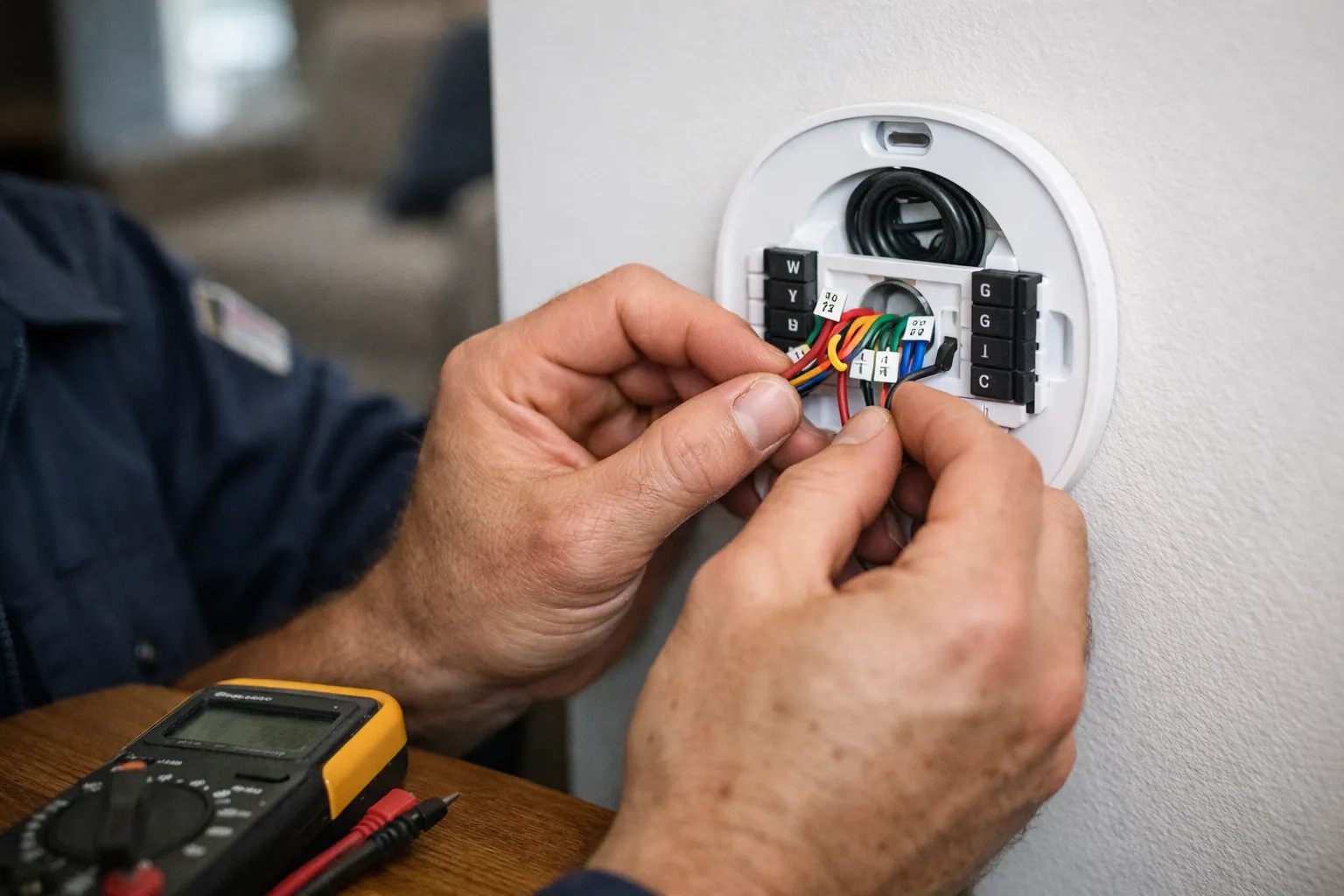
The ecobee SmartThermostat is one of the better-known consumer‑grade smart thermostats that has found steady uptake among HVAC contractors and system enthusiasts. This review evaluates the device from an installer and systems perspective: what it does well, where it struggles in retrofit and pro installations, and which applications it suits best.
What I tested
My hands‑on review used an ecobee SmartThermostat (retail model sold with remote room sensors) in three common retrofit scenarios over six weeks:
- A 2008 single‑family home with a conventional 24V two‑stage heat/one‑stage cool split system and no C‑wire;
- A 2017 variable‑speed inverter heat pump with multi‑stage auxiliary heat and communicating equipment;
- A small two‑zone residential setup using a bypass damper and relay panel for zone control.
Key features evaluated
- Room sensors: wireless temperature and occupancy sensors for averaging and occupancy‑based control.
- C‑wire solutions: compatibility with conventional C‑wire and vendor Power Extender Kit (PEK) for C‑wire‑less installs.
- Staging and heat‑pump support: multi‑stage systems and heat pump aux/backup handling.
- Integration: Apple HomeKit, Google Assistant, Amazon Alexa, and common IFTTT/third‑party ecosystems.
- Installer/commissioning tools: setup menus, wiring diagrams, and remote diagnostics via the ecobee app.
Performance and real‑world observations
Sensor strategy. The ecobee’s room sensors are the thermostat’s strongest differentiator compared with many smart thermostats. They report local temperature and motion and can be set to “Follow me” so the thermostat biases control toward occupied rooms. In practice the sensors improved perceived comfort in rooms distant from the hallway thermostat and reduced over‑cycling in small homes where a single thermostat reads an off‑axis temperature.
Wiring and power. The device requires a C‑wire for reliable operation. For homes without a C‑wire, ecobee supplies a Power Extender Kit (PEK) that uses existing control wires to supply the thermostat. In my testing the PEK enabled tidy installs in two of the three retrofits. However, installers should be cautious: the PEK can be finicky on variable‑speed or communicating furnaces/heat pumps and sometimes requires verification of control board compatibility. When feasible, running a dedicated C‑wire remains the most robust retrofit approach.
Staging and heat pump behavior. The ecobee handles conventional multi‑stage systems and heat pumps with auxiliary heat correctly in standard configurations. It exposes stage parameters and minimum run times during setup. For complex communicating systems (Proprietary protocols) the thermostat cannot replace OEM controls; it works as a standard 24V controller but will not integrate with manufacturer‑specific features such as compressor modulation or fault reporting.
Cloud and connectivity. Many advanced features (scheduling, remote access, energy reports) require cloud connectivity. During a brief Wi‑Fi dropout the thermostat maintained local temperature control, but cloud‑only conveniences were unavailable. For mission‑critical installations—medical rooms, server closets—this cloud dependency is a factor to weigh.
Commissioning and diagnostics
The mobile app and local menus give clear wiring guidance and let installers select equipment type and stages. Diagnostics are adequate for field checks: you can force stages, check sensor status, and view recent runtime. For detailed HVAC fault codes or compressor behavior you still need OEM tools and gauges.
Pros
- Room sensors materially improve comfort in multi‑room homes and offset single‑sensor setbacks.
- Robust multi‑platform smart home integrations (Apple HomeKit, Google, Alexa).
- Installer‑friendly setup with clear wiring diagrams and on‑screen prompts.
- Good staging support for conventional multi‑stage furnaces and heat pumps.
- Reasonable price point and widely available replacement sensors.
Cons
- PEK C‑wire workaround works, but installers report mixed behavior with variable‑speed or communicating furnaces—dedicated C‑wire preferred.
- Cloud dependency for some advanced features; outages limit service visibility and remote control.
- Not a substitute for OEM communicating controls on advanced compressors and VRF systems.
- Sensor battery life is limited relative to hardwired sensors; replacement cost over years should be considered.
Who should specify ecobee SmartThermostat?
Recommended:
- Residential HVAC contractors retrofitting single‑family homes seeking improved occupant comfort without complex control upgrades.
- Enthusiasts and tech‑savvy homeowners who want multi‑room occupancy sensing and smart home integrations.
- Small commercial spaces with conventional 24V systems where cloud features add value (remote access, schedules).
Not recommended:
- Large commercial or institutional systems where BACnet/Modbus, OEM communication, and centralized BAS integration are required.
- Installations requiring absolute independence from cloud services for monitoring and control.
- Complex variable‑speed or proprietary communicating equipment where full OEM functionality is needed.
Bottom line
The ecobee SmartThermostat is a mature, well‑engineered thermostat that strikes a good balance between occupant comfort features and installer practicality. Its remote sensors deliver noticeable comfort gains in many retrofit scenarios, and its staging support covers the needs of most residential systems. For HVAC professionals, the thermostat is a pragmatic spec choice for homes and small commercial installs—but it is not a drop‑in replacement for OEM communicating controls on advanced commercial or high‑performance condenser and compressor systems. When specifying ecobee, plan for wiring (preferably a C‑wire) and verify compatibility with variable‑speed equipment to avoid field rework.