
Who: Homeowners, HVAC contractors, energy auditors, and DIY-savvy enthusiasts.
What: A July 2026 update on why ductwork leakage is now a system-level problem, what’s changed since April 2026, and exactly where to spend money and effort.
When: Published July 2026 — incorporates recent program tweaks, contractor rollout data, tool availability, and field practice through mid‑2026.
Where: U.S. single‑family and light‑commercial buildings — attics, crawlspaces, basements, and garage‑connected systems, especially in heat‑pump retrofits.
Why: The migration to heat pumps, tighter envelopes, and the maturation of IRA‑funded rebate programs mean duct leakage now directly erodes measured savings, indoor air quality, and equipment life. If a new system runs longer, dehumidifies poorly, or leaves rooms stubbornly cold or hot — suspect the distribution, not just the equipment.
Context: Why ducts matter more in July 2026
Three trends that were brewing earlier this year have hardened into market realities by July 2026:
- Heat‑pump retrofits continue to climb as states deploy Home Energy Rebate funds from the Inflation Reduction Act; more of these installs mean more legacy ducts being reused.
- Performance‑based incentives from state programs and utilities increasingly require documented pre/post leakage or measured fan‑flow numbers — the era of “trust me” rebates is ending.
- Tools and service options matured: aerosol sealing (Aeroseal and direct competitors), low‑cost manometers, and thermostat runtime analytics are now common in contractor toolkits and consumer toolboxes.
Updated 13 Hard Truths About HVAC Ductwork Leaks (July 2026)
- New equipment doesn’t fix old pathways. Reusing trunks and filter racks still undermines new SEER2 and HSPF‑rated heat pumps.
- Returns are the primary silent offender. Filter racks, platform returns and plenums that pull attic/garage air are common and dangerous.
- Leaky returns degrade indoor air quality. Moisture, VOCs, and combustion byproducts can enter the breathing zone when returns aren’t sealed.
- Dust streaks = pressure-driven infiltration, not just filter failure.
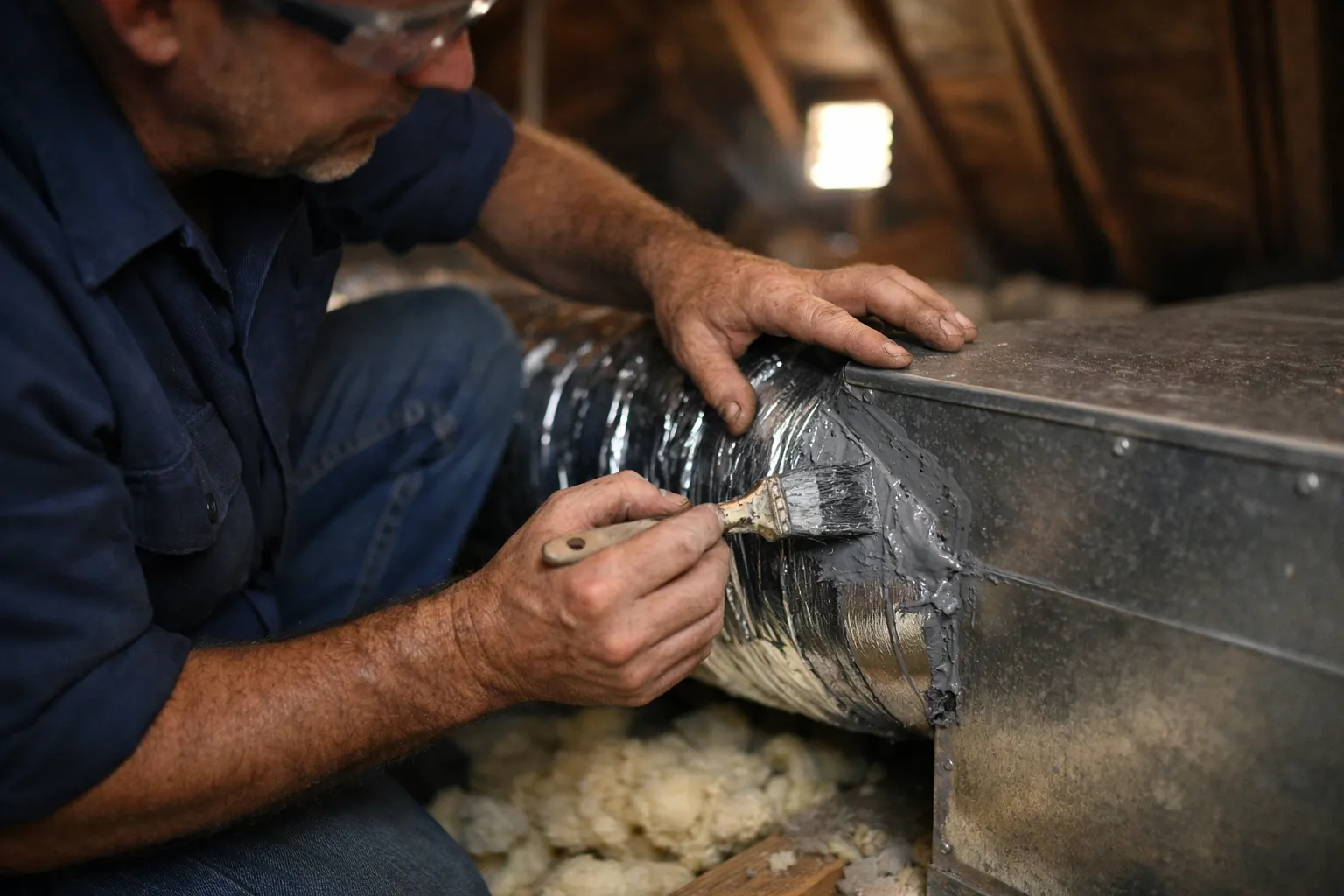
- Cloth duct tape remains a scam for longevity. Use mastic, UL‑rated tapes, and mechanical fastening.
- Flex duct works — when installed correctly. Long unsupported runs, sharp bends and crushed sections mimic leakage losses.
- Closing vents usually backfires. Raising static pressure routes flow through unintended leaks.
- Delivery losses mimic charge or compressor faults. Long runtimes, frosting signatures and dehumidification problems often trace to low delivered CFM.
- Comfort complaints point to distribution before controls. A persistent 3–5°F room delta most often ties back to leaks, balancing, or register routing.
- Garage returns are a regulatory and health risk. Several jurisdictions now discourage or prohibit direct garage returns—seal or eliminate them.
- High‑MERV filters can worsen airflow without a sealed return path.
- Measure before you spend. Buy or borrow a manometer (see tool suggestions below) and log static pressures and runtimes before major fixes.
- The hidden cost is equipment wear. Distribution losses turn premium, inverter-driven systems into overworked units — shortening life and increasing service calls.
What’s new in July 2026: tech, programs, and the contractor landscape
- Aerosol sealing is broadly available and better documented. Aeroseal and multiple regional competitors report average leakage reductions in the 60–90% range on qualifying systems; many contractors now include pre/post CFM25 (CFM at 25 Pa) documentation as standard.
- Rebate programs require measurement. State-administered IRA Home Energy Rebate and utility programs increasingly demand pre/post leakage numbers or verified fan‑flow data to qualify for HVAC or whole‑home incentives — expect this to expand through 2027.
- Diagnostics moved into the consumer lane. Bluetooth manometers, $30–$200 digital gauges (brands like UEi, Fieldpiece and Testo are common examples), and smart‑thermostat runtime exports make it easier for owners to triage systems before calling a pro.
- Contractor training is scaling up. Manufacturers and third‑party trainers are delivering aerosol sealing and duct‑testing courses; credentialing is becoming a differentiator in RFPs for rebate work.
Details: practical checks you can run this weekend
1) Tissue‑at‑return test
Run the blower on high. Hold a thin tissue at filter rack edges, plenum seams and return grille perimeters. Strong pull or flutter = seal first.
2) Attic sniff + register test
With the system running, stand by ceiling registers and sniff for attic or garage odors. Trace those smells back to returns or filter doors.
3) Temperature split and runtime
Measure supply vs return delta‑T at the return/grille and across the coil. Long runtimes with a low delta‑T suggest delivery loss; log runtimes for a week to establish a baseline.
4) Visual inspection
Look for dust lines at grilles, loose collars in attics, and gaps at the filter access. These are immediate, high‑ROI repair points.
Where to spend your time and money (highest ROI in July 2026)
- Seal the return at the air handler first. Filter rack, plenum seams and blower cabinet interfaces give the biggest bang for the buck.
- Fix the first 5–10 feet of trunk runs. Collars and seams here leak the most and are easiest to access from attics or basements.
- Repair register boots to drywall. Sealing these prevents “phantom conditioning” of cavities.
- Consider aerosol sealing when leakage exceeds ~25% of fan flow or when access is limited. Require written pre/post CFM25 or percentage reduction and a warranty. Costs commonly run in the low‑to‑mid thousands depending on home size; get three bids.
Impact: who wins and who loses
Homeowners who add high‑efficiency equipment but ignore duct paths pay more in runtime, get worse humidity control, and still complain about comfort. Utilities and states enforcing measured performance win real energy savings; contractors who can document results capture more rebate work. If you’re about to spend $8,000–$20,000 on a heat‑pump swap, saving a small percentage by sealing ducts first is the smartest, lowest‑risk move.
Reactions from the field
"We’re seeing a surge of calls after heat‑pump installs," says an independent contractor in Denver who asked to remain anonymous. "Owners assume the unit will cure everything. It won’t if the air never gets to the rooms. Now the rebates force us to prove it — and that’s improved outcomes."
What’s next: watch through late 2026 and 2027
- More utility and state programs will tie rebates to measured pre/post leakage or verified fan‑flow (CFM25 or percent of fan flow).
- Contractor certification for aerosol sealing and duct testing will become a common line item in proposals for rebate work.
- Consumer tools and thermostat runtime analytics will keep improving; owners who learn basic manometer use will save on unnecessary service calls.
Quick action plan (do these three things this month)
- Seal the return near the air handler with mastic and mechanical fastening.
- Inspect and secure trunk collars and the first 10 feet of runs in attics or crawlspaces.
- Document: record runtimes and room temps for a week and, if hiring a contractor, require pre/post CFM25 or leakage percentage on paper.
FAQs
Is aerosol (Aeroseal) duct sealing worth it?
Often yes for hard‑to‑access systems or when leakage is significant. Manufacturer and contractor data show typical leakage reductions of 60–90% on qualifying systems. Require written pre/post CFM25 numbers and a service warranty before signing.
How much does a professional duct test and sealing cost?
Expect a duct leakage test to run roughly $200–$600 depending on market. Aerosol sealing and associated repair work commonly runs in the low‑to‑mid thousands for typical single‑family homes; get multiple bids and pre/post performance numbers.
Can a new heat pump hide duct problems?
Yes. Inverter compressors and variable‑speed blowers can run longer and chase setpoints, masking delivery losses. If runtime rises and bills don’t fall after an equipment swap, check the ducts first.
What diagnostic tools should I buy?
A basic digital manometer ($30–$200) and an infrared thermometer or two thermocouples are the minimum. Brands commonly used in the field include UEi, Fieldpiece and Testo; learn to measure static pressure and delta‑T before major interventions.
Do rebates still cover duct sealing?
Yes — many state and utility programs funded by IRA-era allocations include duct sealing and aerosol sealing when verified by pre/post testing. Check your state energy office and local utility website for current requirements and documentation rules.
If you want a system reality check, tell me: heat‑pump or furnace, where the ducts live (attic/crawl/basement/garage), and the one room that refuses to behave. We’ll point to the most likely leak and the smartest next step.