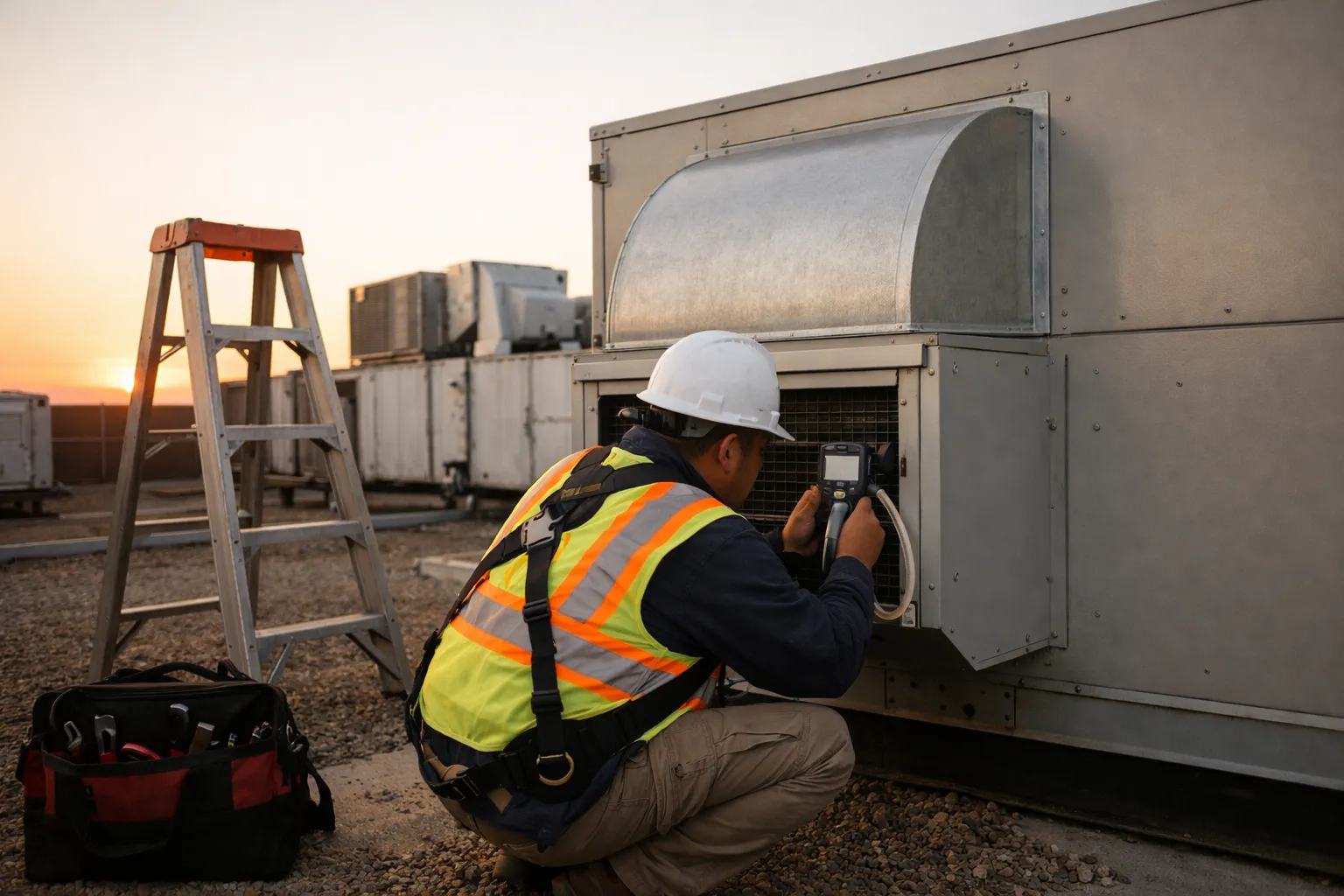
What you'll learn: This updated August 2026 guide walks HVAC system enthusiasts and practitioners through a practical, step‑by‑step process to retrofit a Dedicated Outdoor Air System (DOAS) with energy recovery in older office buildings. It includes refreshed data, recent technology trends (heat‑pump DOAS, IoT monitoring, low‑GWP refrigerants), updated code context, commissioning best practices and long‑term monitoring approaches.
Who this is for: Engineers, building operators, owners and retrofit project leads working on mid‑century (1960s–1980s) office stock who want to improve indoor air quality (IAQ), reduce reheat energy and align with current energy and decarbonization programs.
Prerequisites & context
Before starting: have recent building documentation and baseline measurements. Key references to use during design are ASHRAE 62.1 (current edition), local energy codes and utility incentive program rules. Since 2023–2026 the market has continued to shift toward electrification and measurement‑based commissioning; expect incentives and permitting requirements to reward decoupled ventilation and high‑effectiveness energy recovery.
- Baseline data: 2–4 weeks of hourly occupancy, CO2, and RH logging; utility bills (12–36 months).
- Site constraints: rooftop structural capacity, mechanical room access, electrical service capacity and existing BAS network details (BACnet/IP, Modbus TCP, or manufacturer cloud APIs).
- Code context: many jurisdictions now strongly encourage or require energy recovery above a ventilation threshold (commonly near 5,000 cfm), and incentive programs favor heat‑pump electrification and high‑efficiency ERV/HRV equipment.
Why retrofit a DOAS now (2026 update)
Drivers that matter today:
- IAQ and occupant expectations: Post‑pandemic awareness plus recent occupant health studies have pushed tenants to expect independent outdoor air handling, MERV‑13+ filtration, and humidity control.
- Energy and carbon: Energy recovery reduces ventilation energy and, when paired with heat‑pump reheat, enables major onsite fossil‑fuel reductions—important for owners tracking Scope 1/2 targets.
- Incentives & finance: Federal, state and utility programs (expanded since 2022) increasingly provide rebates and tax incentives for high‑efficiency ventilation and electrification measures; these can materially shorten payback.
- Digital ops: Advances in sensor networks, analytics and continuous commissioning make post‑retrofit verification and persistent performance far easier and more cost‑effective than in prior decades.
Step 1 — Project scoping and site audit
- Collect plans and photos of existing rooftop units, AHUs, VAV boxes, reheat coils and mechanical rooms. Note fuel types (gas, electric) and hydronic circuitry.
- Deploy CO2 and RH loggers in representative zones for 2–4 weeks; simultaneously record occupied schedules and peak loads.
- Measure existing outdoor airflow where possible—use capture hoods at representative diffusers or pitot traverses at ducts. If measuring is impractical, derive OA from system drawings and BAS trending.
- Assess structural and routing constraints for ductwork and condensate drains; log rooftop access, crane/insertion limits and fire separation issues.
- Review BAS capacity and network security requirements—identify points for fan, damper, differential pressure and IAQ sensor integration.
Step 2 — Calculate design ventilation and latent loads
Follow ASHRAE 62.1 procedures (current edition) for OA sizing. Updated emphasis for 2026:
- Include typical post‑pandemic occupancy patterns (hybrid schedules) when calculating ventilation schedules and diversity.
- Calculate latent load explicitly—OA latent load commonly governs coil sizing in humid climates. Use local design wet‑bulb conditions and peak occupancy scenarios.
- Document design OA by floor/zone and peak OA for worst‑case makeup (e.g., pressurization or purge requirements).
Example: a 60,000 ft² office with 300 design occupants might result in 7,000–10,000 cfm OA depending on zone mix. Use the standard tables and avoid rule‑of‑thumbs for final coil sizing.
Step 3 — Choose DOAS architecture (new options and tradeoffs)
Options in 2026 include:
- Packaged rooftop DOAS with enthalpy wheel and optional heat‑pump coils—best when rooftop space exists and electrical service is adequate.
- Modular mechanical‑room DOAS for constrained rooftops; modules staged for redundancy and easier shipping into tight urban mechanical rooms.
- Run‑around glycol loops remain useful where physical airstream separation is required (e.g., laboratories or labs‑converted offices), but effectiveness is lower than wheels.
- Heat‑pump DOAS (DX or integrated refrigerant‑to‑air heat pumps) have matured: improved low‑ambient performance and use of lower‑GWP refrigerants are common—good where electrification is a priority.
- Desiccant dehumidification is seeing renewed use in very humid climates where latent load control via sensible coils and cooling is inefficient.
Selection criteria in 2026 emphasize lifecycle carbon, refrigerant choice (favor low‑GWP when feasible), and digital integration capability (built‑in monitoring and remote diagnostics).
Step 4 — Energy‑recovery specifics and cold‑climate strategies
Effectiveness and frost management are decisive:
- Enthalpy wheels: Typical total effectiveness ranges 60–85% for sensible and latent transfer; they deliver the highest energy savings for mixed climates but require cross‑contamination safeguards, filtration upstream, and robust frost control algorithms.
- Sensible plate exchangers: Lower maintenance risk and no rotating seals; suitable where moisture transfer is not needed.
- Run‑around loops: Equivalent effectiveness commonly 40–65% depending on loop design and glycol temperature delta.
- Frost control: Modern DOAS units use predictive controls (weather forecast integration) and heat‑pump preheating algorithms to reduce energy penalties during defrost. Where gas preheat is still used, evaluate lifecycle carbon versus electrified preheat.
Step 5 — Heating, cooling and active dehumidification strategies
Design the DOAS to deliver dehumidified neutral air; leave space heating to terminal systems:
- Size DOAS cooling coils for latent control first. If the building has chronic summer humidity, include a dedicated dehumidification loop (e.g., heat‑pump dehumidifier or desiccant wheel).
- Decide reheat strategy with carbon goals in mind: hydronic reheat enables later conversion to low‑carbon boilers or heat‑pump water heaters; electric reheat is simpler but increases site electricity.
- When choosing heat‑pump DOAS, confirm low‑ambient performance curves and refrigerant choices (many manufacturers now offer R‑454B, R‑454C or other low‑GWP options in 2024–2026 product lines).
Step 6 — Distribution and integration with existing HVAC
Integration remains a frequent source of field issues. Updated 2026 practices:
- Prefer feeding DOAS into AHU return plenums or dedicated mixing boxes where duct routing allows; avoid direct injection near return openings that cause short‑circuiting.
- Use pressure sensors to maintain building supply/return balance, and implement fan VFD control coordinated with zone VAV positions to reduce fan energy.
- Document clear control authority: specify which device commands heating and cooling to avoid simultaneous reheat and cooling. Include priority and lockout logic in the sequence of operations.
- Insulate and seal all new ducts to at least the levels in current energy codes; consider continuous duct smoke detection and access panels for balancing and maintenance.
Step 7 — Controls and sequences (emphasis on M&V and digital ops)
Controls determine delivered performance. Include these elements:
- OA flow verification: install airflow stations and integrate them into the BAS for continuous verification and alarms. Trend OA cfm against schedule and occupancy.
- Smart DCV: move beyond single CO2 points—use a multi‑sensor strategy (CO2, CO, VOCs, RH) in critical zones and aggregate to avoid erroneous modulation. Implement sensor drift alarms and periodic calibration reminders.
- Energy‑recovery sequencing: allow wheel bypass only under well‑defined conditions. Use enthalpy comparison controls to decide economizer vs ERV operation to prevent disabling energy recovery benefits.
- Predictive defrost: many vendors now supply forecast‑based defrost sequences that reduce electric preheat runtime in cold climates.
- Cloud analytics & continuous commissioning: include data export and analytics for M&V. Consider a one‑year performance contract with periodic tuning and anomaly detection.
Step 8 — Filtration and IAQ measures
Filtration remains the first line of defense:
- Design for at least MERV‑13 at the DOAS intake where static pressure allows; consider MERV‑14 or HEPA for high‑risk zones. Use staged filtration (pre‑filter + fine filter) to protect wheel media and coils.
- Install filter differential pressure monitoring and accessible change access. Include a documented replacement schedule tied to measured ΔP and dust loading.
- Consider UVGI downstream of ERVs if microbial growth is a documented risk—use manufacturer‑backed dosing and maintenance plans.
Step 9 — Commissioning, performance testing and M&V
Commission thoroughly and plan for measurement‑based verification:
- Airflow balancing: verify OA at the DOAS and sample representative zone registers during occupied modes; document against design targets per ASHRAE guidance.
- Effectiveness testing: measure temperatures and humidity on both airstreams to calculate sensible and total effectiveness. Trend performance over the first year to capture seasonal variance.
- Controls validation: test DCV, alarms, wheel bypass/defrost, and failover modes. Include simulated sensor drift and communication failure tests.
- Energy & IAQ M&V: baseline pre‑retrofit energy and IAQ metrics and compare them to post‑retrofit data using IPMVP‑style approaches; include a 12‑month post‑installation tuning window in the contract.
Step 10 — Operation, maintenance and long‑term monitoring
Ensure sustained performance with continuous monitoring and clear procedures:
- Create a maintenance plan with filter, belt, wheel cleaning and coil schedules tied to sensor thresholds (ΔP, wheel torque).
- Implement dashboards with OA cfm, supply temp/RH, filter ΔP and wheel torque trending. Use automated alerts for out‑of‑range conditions.
- Budget seasonal tuning: adjust frost thresholds, economizer settings and DCV setpoints each season for optimal energy/IAQ balance.
- Train operations staff with hands‑on sessions and provide an illustrated operations manual that includes emergency procedures for loss of power or refrigerant leaks.
Costs, savings and a sample 2026 payback snapshot
Costs still vary widely by site complexity. Updated observations from recent projects (2023–2026): measured HVAC energy reductions commonly range from 10–30% after a DOAS + energy recovery retrofit when decoupling ventilation reduces reheat; projects that pair DOAS with heat‑pump reheat show larger fossil fuel reductions and better lifecycle carbon outcomes.
Illustrative example (realistic 2026 assumptions): 60,000 ft² office installs an 8,000 cfm DOAS rooftop unit with enthalpy wheel and a heat‑pump water heater for hydronic reheat. Modeling shows 18% HVAC energy reduction; with current utility rebates and tax incentives the simple payback can be 4–10 years depending on electricity/gas prices and available incentives. Run a site‑specific life‑cycle cost and carbon model before committing.
Common pitfalls and how to avoid them
- Under‑sizing for latent load — always size DOAS cooling capacity for moisture control, not just room sensible load.
- Poor controls integration — define control authority and sequence explicitly in contract documents; validate during commissioning.
- Inadequate access for maintenance — plan service clearances for wheels, filters and coils at the design stage.
- Ignoring refrigerant strategy — select heat‑pump DOAS equipment with low‑GWP refrigerants and leak detection if decarbonization is an objective.
- Skipping continuous M&V — without trend data, ERV performance drifts undetected; include analytics and alarms in the scope.
Pro tips
- Specify vendor support for remote diagnostics for at least the first 12 months to accelerate commissioning and tuning.
- Use multi‑metric IAQ control (CO2 + eCO2/VOC + RH) for DCV to avoid over‑ventilation or poor responses from single sensors.
- When retrofitting in cold climates, compare lifecycle energy and carbon impacts of electric heat‑pump preheat versus short‑cycling gas preheat—model both.
- Consider staged filtration and a service schedule tied to measured ΔP rather than calendar days—this reduces operating cost and maintains IAQ.
Next steps / kickoff checklist
- Perform a 2–4 week ventilation and IAQ audit with CO2 and RH logging across representative zones.
- Calculate DOAS sizing with ASHRAE 62.1 inputs and include latent sizing per local climate data.
- Prepare RFP specifying energy recovery type, frost control approach, filtration, controls points and data export requirements for M&V.
- Require performance guarantees, a one‑year tuning window and documented functional tests in the contract.
- Plan M&V: baseline energy and IAQ metrics and a plan to report measured outcomes at 3, 6 and 12 months post‑commissioning.
Why this matters now
Retrofitting DOAS with energy recovery unlocks simultaneous IAQ, energy and carbon benefits for older office buildings. In 2026, advances in heat‑pump technology, low‑GWP refrigerants, digital monitoring and expanded incentive programs make DOAS retrofits both technically feasible and economically attractive. Success depends on explicit latent load sizing, careful energy‑recovery selection, rigorous controls and a commitment to measurement‑based commissioning and operations.
FAQ
Do I need an enthalpy wheel or is a plate exchanger sufficient?
Choose based on moisture transfer needs and cross‑contamination risk. Enthalpy wheels deliver the best total (sensible + latent) effectiveness and are preferred in mixed climates with significant latent loads. If moisture transfer is undesirable or the risk of cross‑contamination is high, a sensible plate exchanger or run‑around loop may be safer. Evaluate maintenance access, filtration and frost control together with effectiveness when deciding.
Is heat‑pump DOAS mature enough for cold climates?
Yes—by 2026 many manufacturers offer heat‑pump DOAS units with improved low‑ambient performance and lower‑GWP refrigerant options. Confirm certified performance curves at your design winter temperatures and include some electric or hydronic backup for extreme cold events or for redundancy if required by your risk assessment.
How should I verify the energy‑recovery performance after installation?
Measure temperatures and humidity on both OA and exhaust airstreams and calculate sensible and total effectiveness. Combine these spot tests with continuous OA flow trending and wheel torque/ΔP monitoring. For financial verification, perform an IPMVP‑style M&V using pre‑ and post‑retrofit utility data and normalized operating hours.
What filtration level should I design for?
Design for at least MERV‑13 at the DOAS intake where static pressure allows; use prefilters to protect fine media and the wheel. Consider HEPA or higher filtration in high‑risk zones or where tenant requirements demand it. Always tie filter change schedules to measured ΔP to avoid overpressurizing fans or compromising airflow.
Will switching to DOAS eliminate tenant comfort complaints?
DOAS significantly reduces complaints related to ventilation, odors and humidity by decoupling outdoor air treatment from space temperature control. However, comfort complaints can persist if terminal heating/cooling is not properly controlled, if distribution is uneven, or if controls sequences conflict. Robust commissioning and an initial tuning window are essential to realize the expected comfort benefits.