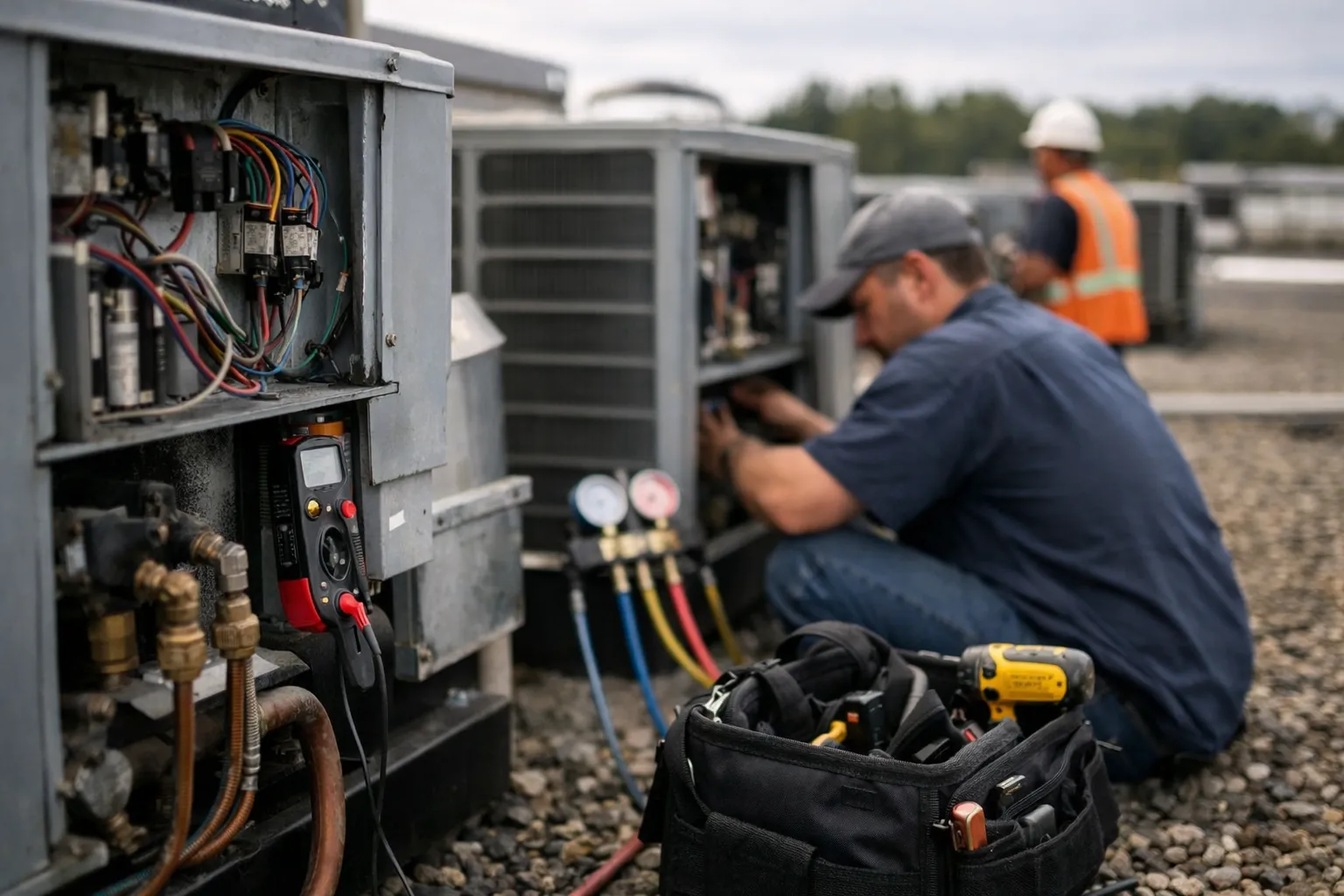
WASHINGTON, D.C., Oct. 6, 2026 — Two months after the U.S. Department of Energy (DOE) issued the first tranche of grants under its 2026 HVAC workforce initiative, recipients and industry groups report measurable early progress on three fronts: classroom and lab capacity, hands‑on curricula for heat pumps and A2L refrigerants, and employer placement pathways. The awards — targeted at community colleges, labor unions and nonprofit training providers — aim to expand the pipeline of technicians qualified for electrification‑ready HVAC work where demand for heat pumps is strongest.
Why this update matters now
DOE announced the initial awards in August 2026 to help address chronic installer shortages as states and utilities scale consumer rebates and building electrification programs. With peak installation season underway and more jurisdictions tying incentives to certified installers, the effectiveness of these seed grants will determine whether local markets can meet near‑term demand without quality or safety tradeoffs.
What’s changed since August 2026
Across sites visited by HVAC System Guide and reporting from grant recipients through October 2026, several concrete developments have emerged:
- Increased enrollment and waitlists. Multiple community colleges that received grants report enrollment increases for HVAC courses, and several have established waitlists for fall cohorts after adding lab sections.
- New and upgraded labs coming online. Recipients are completing modular training rigs and commissioning variable‑speed heat‑pump benches and charging stations compatible with low‑GWP blends and A2L refrigerants; a handful reported first student commissioning sessions in September 2026.
- Employer commitments formalized. Grant contracts required employer partnership letters; many awardees report signed memoranda of understanding (MOUs) with local contractors guaranteeing paid apprenticeships or interview pipelines for graduates.
- Curriculum standardization underway. Consortiums formed by community colleges and trades groups are piloting modular course syllabi that include A2L safety, refrigerant handling, commissioning and electrical crossover topics — with the aim of shared, stackable credentials.
Specific examples and early performance indicators
Examples reported to HVAC System Guide in October include a union training center in the Mountain West that added two A2L simulation rigs and ran its first safety‑certified cohort in late September, and a community college in the Southeast that used grant funds to retrofit an older lab and enrolled 18 apprentices in an employer‑backed placement program. While DOE's formal evaluation metrics (placement rates, employer satisfaction, defect reductions) are not yet public, these site‑level indicators show momentum in capacity and employer linkage — two objectives DOE prioritized in its award guidance.
Why industry observers are encouraged — and cautious
Trade associations such as the Air Conditioning, Heating, and Refrigeration Institute (AHRI) and the Air Conditioning Contractors of America (ACCA) have publicly welcomed the grants as a necessary catalyst. Observers highlight three advantages:
- Faster scaling of practical labs that let students practice with A2L‑capable equipment.
- Employer‑driven apprenticeships that increase job placement and reduce training‑to‑work gaps.
- Improved commissioning practices when technicians are taught charge‑by‑weight, airflow diagnostics and hybrid system integration.
However, stakeholders caution that initial funding is a first step. Remaining challenges include developing nationally portable credentials, funding ongoing instructor pipelines, and resolving jurisdictional permitting and electrical inspection differences that slow A2L and heat‑pump installations.
Impact by region and market
Recipients and market signals indicate the grants are having outsized effects in three regional categories:
- Rebate‑driven markets (Northeast, West Coast): Contractors in states with aggressive consumer rebates report more projects but say they still face scheduling bottlenecks; training grants are helping produce technicians ready for rebate‑qualifying installations.
- High‑growth electrification regions (Southeast, Mountain West): New training capacity in these areas is shortening lead times for installations and increasing contractor confidence to bid on electrification projects.
- Legacy markets with upskilling needs (Midwest): Programs are emphasizing crossover electrical skills so technicians can safely assume responsibility for electrification‑heavy retrofits.
Industry reaction — voices on the ground
"We've seen a tangible difference in classroom throughput and employer engagement since the August awards," said a training director at a recipient community college (who asked not to be named while program enrollment was still being finalized). "The real test will be placement rates after the first round of apprentices completes their field hours in 2027."
Manufacturers have pledged expanded equipment donations and loan programs to training sites, and several distributors told HVAC System Guide they are working with local schools to place demonstration units and charging kits in labs this fall.
What HVAC professionals should do right now
Based on early rollouts and industry feedback, here are actionable steps for contractors, technicians and training providers to prioritize through Oct.–Dec. 2026:
- Reach out to local recipients now. Contact nearby community colleges, unions and nonprofit training centers to understand fall/winter cohort dates and how to register technicians for modular A2L and heat‑pump commissioning classes.
- Secure at least one A2L‑trained tech per crew. Employers should require A2L competency and commissioning certification on projects using A2L refrigerants to reduce permitting and safety delays.
- Partner with training labs for equipment access. Distributors and manufacturers can loan demo units or sponsor charging rigs; contractors can sponsor stipends to guarantee apprenticeships.
- Push for stackable credentials. Associations and contractors should work with recipients to ensure course credits and certificates are recognized across state lines and by utilities offering installer incentives.
What's next — timelines and metrics to watch
DOE has framed the initial awards as a proof‑of‑concept. HVAC System Guide will watch three near‑term milestones:
- DOE’s planned interim evaluation (expected late 2026 or early 2027) that will likely report placement rates and employer feedback;
- Whether a growing number of contractors require or prefer DOE‑funded program credentials for rebate‑eligible work by mid‑2027;
- Progress toward a regional or national stackable credential recognized by trade groups and permitting authorities.
Longer‑term implications
If these initial programs sustain funding and employer buy‑in, the HVAC sector could see systemic improvements: reduced installation defects, smoother permitting tied to documented technician competencies, and faster deployment of electrification incentives. That will require recurring investments in instructor recruitment, better compensation for apprentices to attract trainees, and closer alignment between training competencies and code enforcement expectations.
Frequently asked questions
Are the DOE grants open to new applicants in late 2026?
Not in this initial tranche. The August 2026 awards funded an early cohort of proposals. DOE has said the first round is a proof‑of‑concept; additional solicitations would depend on the department’s evaluation of outcomes. Contractors should monitor DOE funding notices and state energy office announcements for new opportunities.
Will a certificate from a DOE‑funded program be recognized for consumer rebate qualifications?
That varies by utility and state program. Some rebate administrators are already signaling preference for graduates of programs that include A2L and heat‑pump commissioning coursework. Contractors should confirm specific installer requirements with local rebate administrators before bidding.
How quickly can a technician become A2L‑qualified?
Programs differ. Short modular courses (several days to a few weeks) can teach safe handling and basic commissioning, but field competency requires supervised hours on A2L systems. Many employers and training centers recommend a mix of classroom, lab practice and paid apprenticeship hours before taking on A2L projects unsupervised.
What should distributors and manufacturers do to support training providers?
Provide loaner or donated demo units and charging kits, offer instructor training and fund stipends for apprentices. Those actions reduce the upfront capital burden on training sites and accelerate hands‑on learning.
For HVAC professionals, the immediate takeaway in October 2026 is straightforward: training capacity is expanding in targeted regions, employer pathways are being formalized, and getting connected to these early programs now will likely confer a competitive edge as electrification demand intensifies into 2027.