
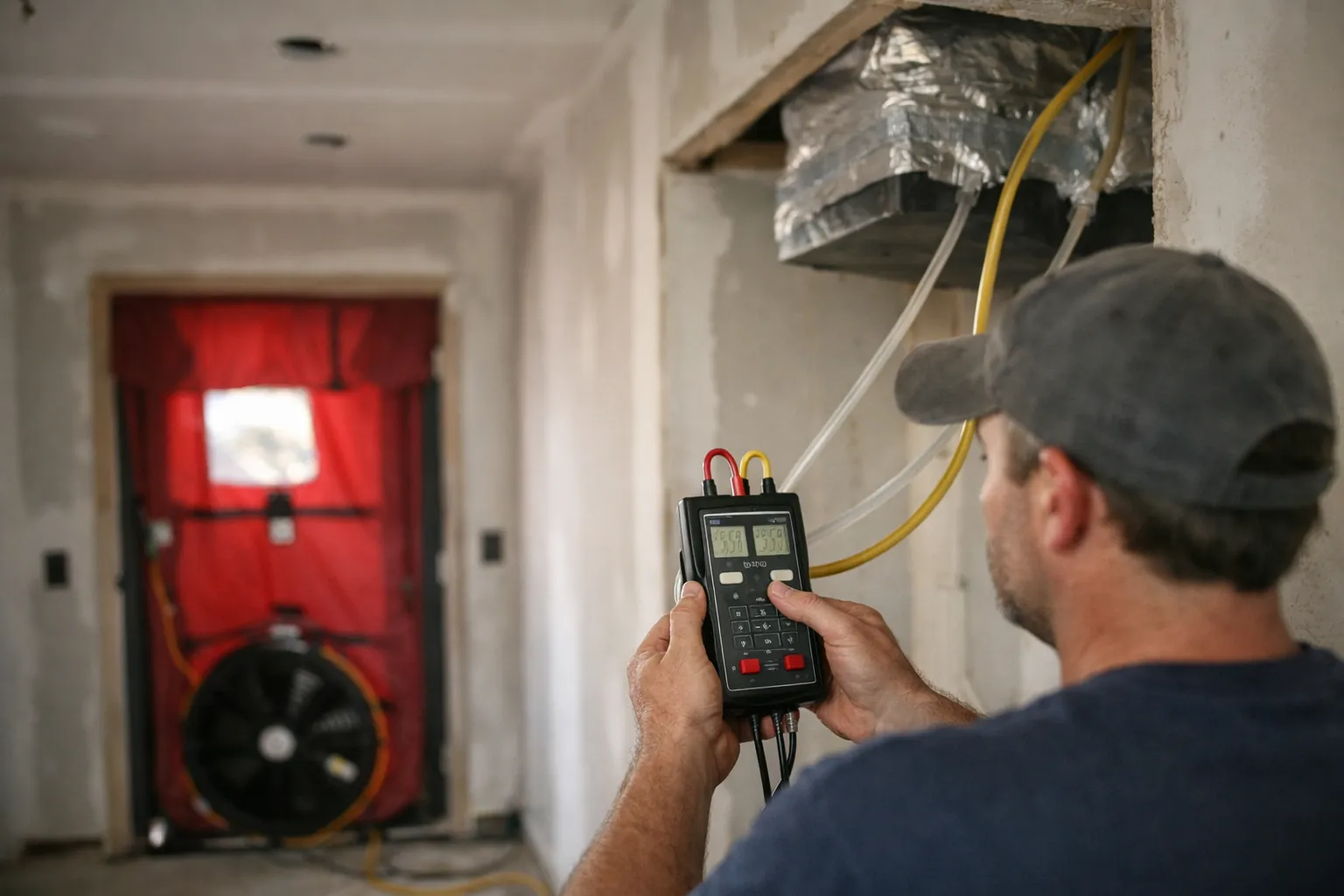
Overview: Why this modest code change matters more than it looks
By mid‑2026 the single most consequential near‑term shift in residential HVAC performance isn’t a new SEER breakpoint — it’s that duct systems have moved from “best practice” to “tested, documented component.” The IECC 2024 model language explicitly elevates duct leakage verification and boundary definition. For owners of high‑end homes and the contractors who serve them, the practical payoff is quieter, more even comfort and fewer retrofit headaches; the penalty for inattention is persistent occupant dissatisfaction despite expensive equipment.
Background: How the code change arrived and why it stuck
Energy codes long prioritized envelopes, glazing, and appliance efficiency. Field results from national‑lab programs, utility pilots, and third‑party raters over the past decade demonstrated a consistent problem: modeled HVAC gains vanish when duct leakage and distribution defects are left unaddressed. Two technical trends pushed the priority higher:
- Tighter building envelopes. As insulation, windows and air sealing improved, distribution losses that previously were marginal became significant relative to the reduced heating and cooling loads.
- Shifted duct boundaries. The industry’s move to route ducts into conditioned attics, chases and compact mechanical rooms blurred the line between “inside” and “outside” ductwork, prompting stricter definitions and verification to prevent gaming of exemptions.
IECC 2024 codified verification language so jurisdictions could require documented testing. Adoption is uneven—local governments modify model codes—but by June 2026 verification has become a practical compliance and quality‑control pathway in most markets moving toward performance‑based codes.
Data & evidence: What field work through 2025–mid‑2026 shows
Published field trials and program reporting through late 2025 — from DOE Building America, national laboratories, several large utility pilots, and HERS/third‑party program data — reinforce three consistent findings:
- Duct location matters most. Systems with major trunks in unconditioned attics, crawlspaces or garages show the largest delivery losses. Short, internally routed trunks materially outperform long externally routed runs.
- Return‑side leakage is disproportionately harmful. Return leaks at filter racks, panned joists or poorly sealed plenums draw unconditioned air into the system, upsetting pressure balance and undermining filtration and humidity control.
- Early testing and commissioning cut call‑backs. Builders and contractors who adopted pre‑drywall leakage testing, documented external static pressure (ESP), and room‑by‑room balancing reported noticeably fewer warranty complaints in tracked programs.
Program thresholds vary, but practical rule‑of‑thumb guidance that many 2025–2026 programs referenced includes CFM25 and percent‑of‑fan‑flow metrics (see checklist below) and ESP targets in the 0.3–0.5 in. w.g. range for typical split‑system installs — with premium projects aiming below 0.3 in. w.g. These targets protect airflow and acoustic performance for modern, low‑load homes.
What changed in IECC 2024 — and how that plays out in June 2026 practice
Because local jurisdictions can amend model language, enforcement and specifics vary. Still, the market‑facing consequences that matter to owners and contractors have become consistent:
1) Testing is routine, documented, and often required early
IECC 2024 tightened testing triggers and encouraged verification sooner in the sequence. In practice across many jurisdictions in 2026 this means:
- Pre‑drywall (rough‑in) duct leakage tests are standard when ducts are accessible, enabling repairs before finishes conceal defects.
- Test results increasingly are uploaded to permit portals or included in HERS/utility reporting packages; digital submission (CSV/QR or cloud logs) is common in code enforcement offices that have modernized workflows.
- Responsibility for pass/fail is shifting toward the installing contractor in many areas; contractors must budget for tests and potential rework.
2) “Ducts in conditioned space” claims face closer scrutiny
Inspectors and third‑party raters now demand explicit documentation of the thermal and air barrier around ducts: drawings that show continuous air barriers, photos of seal details, or spot pressure checks. Nominally “inside” ducts — e.g., routed through shallow encapsulated attics or semi‑conditioned chases — often trigger additional proof or spot testing.
3) Sealing durability and methods are scrutinized
Regulators and programs emphasize durable materials and methods: mastic and mechanical fastening for plenums, factory‑sealed prefabricated ducts, and avoidance of panned returns. The use of non‑durable tapes without mechanical fastening is increasingly unacceptable in documented compliance packages. Aerosol duct sealing has gained traction for retrofits and tight new‑build systems where access is limited, and several utility programs now rebate the service.
4) Commissioning data is marketable and increasingly required
Beyond a single leakage number, premium installs now include measured ESP, fan‑curve or flow verification, and room‑by‑room balancing reports. Manufacturers and utilities are tightening links between warranty or incentive qualification and documented commissioning — so expect those deliverables to become baseline expectations in incentive markets.
Multiple perspectives: How stakeholders have adapted
Contractors
Experienced mechanical contractors say testing reduces callbacks and warranty work — but it changes scheduling and cashflow. Successful teams integrate rough‑in tests into production calendars and invest in portable digital manometers, wireless pressure sensors, and cloud reporting to shorten turnaround time.
Builders
Production builders balance marginal upfront cost against downstream risk. In markets with active HERS or utility incentives, testing and sealing are budgeted as line items. High‑end custom builders increasingly market verified commissioning as a differentiator; buyers expecting luxury comfort now ask for test reports before closing.
Raters and code officials
HERS raters, ACCA/BPI professionals and enforcement officers emphasize documentation over anecdotes. Their priorities: clear chain‑of‑custody for test records, inspector access to raw data, and attention to return integrity and access for future service.
Owners and buyers
Discerning owners report that verified distribution systems deliver the qualitative cues they expect from luxury HVAC — steady room temperatures, lower sound levels and more responsive humidity control. For buyers investing in high‑end heat pumps or multi‑zone systems, verified duct performance is increasingly seen as essential, not optional.
Implications: Design, equipment selection and budgets in 2026
Design discipline is non‑negotiable
Manual J, S and D (or equivalent engineered calculations), coupled with a clear ESP and duct leakage target, are standard deliverables on premium projects. Designers are specifying target fan curves and airflow at the register level to ensure equipment selection remains valid after distribution losses.
Duct location now shapes architecture
Architects and MEP teams are deciding duct routing early—favoring conditioned attics, interior chases, or intentionally accessible soffits—so sealing and access are integrated rather than retrofitted. Where external ducts are unavoidable, runs are shortened, insulated, and specified with factory‑sealed connections.
Cost vs. value clarified
Upfront costs for tighter sealing, testing and commissioning add labor and modest materials expense. But the economic argument is clearer in 2026: fewer callbacks, validated manufacturer claims, and higher buyer satisfaction translate into lower total cost of ownership and stronger resale positioning in luxury markets.
Indoor air quality (IAQ) interplay
Tighter ducts protect filtration performance when higher‑MERV filters, ERVs or HRVs are installed. Return leaks that bypass filtration are a measurable IAQ risk; verified duct integrity is an enabling upgrade for owners focused on both comfort and health.
Practical checklist: What to require on your next high‑performance HVAC project
- Confirm the adopted code (IECC 2018/2021/2024 or local variant) for your jurisdiction and get the duct‑testing requirement in writing from your permit office.
- Require a pre‑drywall (rough‑in) duct leakage test when ducts are accessible, and a final test or documented exception where not.
- Specify acceptable leakage metrics in the contract: many programs use a CFM25 threshold or a percent‑of‑fan‑flow target; for premium projects insist on documentation and a performance guarantee (see discussion below).
- Require sealed, mechanically fastened return plenums—no panned returns—and insist on mastic or manufacturer‑approved gasket systems at plenums and coil housings.
- Demand commissioning deliverables: measured ESP, fan‑curve or airflow verification, and a room‑by‑room balancing report submitted as part of the closeout package.
- Design for serviceability: accessible filter racks, coil access, and plenum inspection panels so long‑term sealing integrity can be maintained.
- For retrofits or constrained access, consider aerosol duct sealing (provider certification and warranty details required).
Outlook: What to watch for the rest of 2026
- Adoption patterns: Expect a steady flow of municipalities to fold IECC 2024 language into local ordinances during 2026; the specifics will depend on local political and market conditions, so verify municipal code language early.
- Marketplace differentiation: Commissioning packages — with cloud‑logged test results and register‑level airflow reports — will be marketed as a premium offering by contractors who want to avoid warranty exposure.
- Incentive alignment: Manufacturer warranty and utility rebate programs will increasingly require verified duct performance to qualify claims; these administrative links will tighten regionally over the next 12 months.
FAQ
Does IECC 2024 require duct leakage testing everywhere?
No. IECC 2024 is a model code; requirements apply only where a jurisdiction adopts the model language or its equivalent. By June 2026 many jurisdictions have adopted or are phasing in 2024 provisions, but local amendments and enforcement practices differ. Always check your city or county code and permit requirements before contracting.
If my ducts are inside conditioned space, do I still need a test?
Possibly. Local code language and enforcement determine exemptions for ducts inside the thermal envelope. Inspectors and third‑party raters increasingly require proof that ducts are truly within continuous air and thermal barriers — not merely nominally “inside.” Expect requests for boundary drawings, photos of the air barrier, or spot pressure checks even for inside ducts.
What leakage and ESP targets should I ask a contractor to meet?
Targets vary by program, but practical benchmarks commonly used in 2025–2026 are: aim for ESP below 0.5 in. w.g. (premium projects target ≤0.3 in. w.g.), and specify a CFM25 or percent‑of‑fan‑flow leakage metric in the contract. If you are in an incentive market, use the program’s published thresholds as the contractual baseline.
Will these rules make installations significantly more expensive?
They add modest labor and material costs when done at initial construction. For retrofit work, costs can be higher if access is limited. However, the value is real: fewer call‑backs, validated equipment performance, and better occupant comfort often make the incremental expense economical over the system's lifecycle.
What new tools or services should owners expect from contractors?
Expect wider use of portable digital manometers, wireless pressure sensors, cloud test‑logging, fan‑curve apps, prefabricated sealed plenums, and increased availability of aerosol duct sealing for constrained systems. Contractors who integrate these tools and provide documented deliverables reduce uncertainty for owners and inspectors alike.
Sources: International Code Council (IECC 2024 model language); U.S. DOE Building America and national‑lab field guidance through 2025; ACCA and HERS program practice; utility pilot reports and manufacturer warranty program updates through mid‑2026.