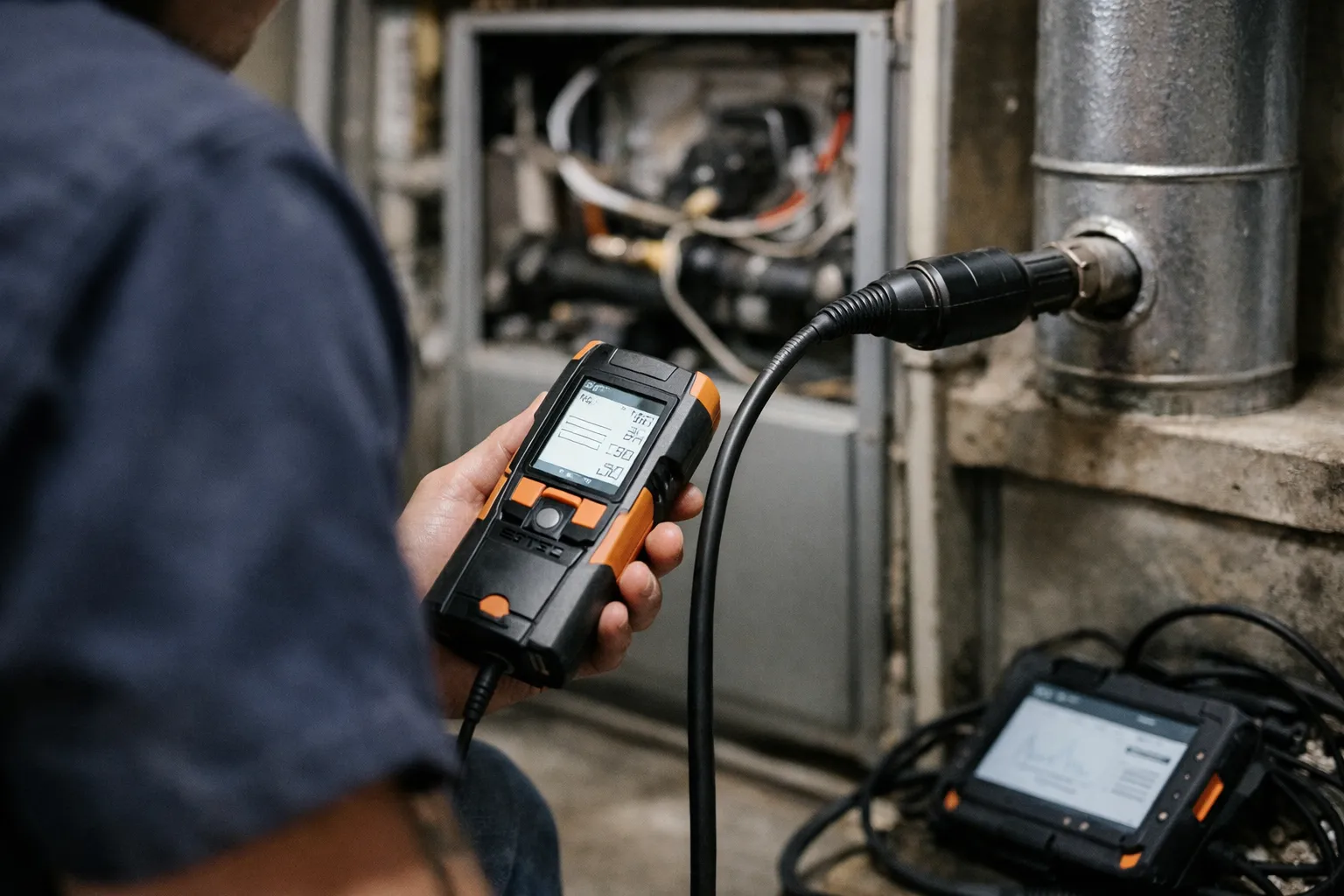
The Testo 330i arrived in many technicians' shortlists as a pocketable, smartphone‑centric flue gas analyzer. This September 2026 update revisits the device after three additional seasons of field use, new industry preferences for connected tools, and evolving shop workflows. I tested the 330i across residential jobs and compared current workflows, pricing and practical needs against alternatives and fleet priorities.
Overview: What we’re reviewing
Device: Testo 330i flue gas analyzer (smartphone‑paired model)
- Measured parameters: O2, CO, flue gas temperature, draft where applicable; efficiency and excess‑air calculations derived from those inputs.
- Interface: Bluetooth to Testo Smart Probes mobile app (iOS/Android).
- Form factor: pocketable probe + compact sensor body with USB‑C charging.
- Typical US retail (Sept 2026): street prices generally fall in the mid‑hundreds to low‑thousands depending on kit configuration; see Pricing/Value below for specifics.
Background: Who makes it and who it’s for
Testo AG, the German instrumentation firm, designs the 330i as an entry‑to‑mid‑level combustion tool for residential and light‑commercial HVAC technicians. The product intentionally trades multi‑gas and regulatory‑grade sensors for portability and an app‑first workflow: it targets service contractors, independent techs, and training programs that prioritize fast diagnostics and customer reporting over laboratory accuracy for emissions compliance.
Features analysis — what’s changed by Sept 2026
Measurement fidelity and repeatability
The core strengths reported in 2026 remain true: the 330i gives repeatable O2 and CO readings adequate for safety checks, tune‑ups and efficiency verification on residential systems. In current field checks across condensing furnaces, non‑condensing boilers and older atmospheric units the 330i tracked a shop reference analyzer within reasonable handheld tolerances for day‑to‑day service work.
Practical distinction: the 330i is reliable for spotting unsafe CO, verifying combustion trend improvements after burner adjustments, and documenting efficiency on residential jobs. It remains unsuitable as a standalone compliance instrument where certified multi‑gas measurements (NOx, NO, direct CO2) or lab‑grade accuracy are required.
App‑first workflow and ecosystem integration
Smartphone integration is now firmly mainstream in field service. Since 2024 Testo’s Smart Probes app has matured in usability: pairing is straightforward, live values display cleanly on a phone screen, and the app exports reports as PDFs and CSVs suitable for invoicing and cloud job files. In 2026 many contractors expect such export capabilities and basic photo/note attachments as part of a standard workflow.
Tradeoffs persist. Bluetooth dependence remains a practical constraint in phone‑restricted sites (some hospitals and secure commercial facilities) and in jobs where phone battery management is unreliable. If your work includes those environments, plan for a phone‑free backup: a basic independent CO meter or a non‑app analyzer.
Probes, pump performance and durability
The probe length, filter accessibility and USB‑C charging continue to be positives. The pump is adequate for typical residential flues, but technicians still report slower response on long‑run, low‑draft chimneys and on heavy soot conditions. Consumables — inlet filters and pump filters — are user‑replaceable and widely available through Testo distributors.
Build quality is solid for a compact tool when handled properly. It’s not engineered to survive repeated 2–3 m drops; a padded pouch and routine inspection of the probe seal and filter are sensible shop practices.
Battery life and field uptime
Battery performance meets the expectations of a day’s mixed use. Typical field workflows (on/off tests over a 6–8 hour day) leave headroom, and USB‑C charging from in‑van power packs or portable battery banks remains convenient. Remember: the phone is part of the measuring chain — phone battery management is equally critical.
Pros and cons — quick checklist (updated)
- Pros: pocketable, repeatable core measurements for residential work, intuitive app UI and fast job reporting, USB‑C charging, lower price than lab analyzers.
- Cons: phone dependency can block use on some sites, no NOx/NO/direct CO2 sensors (limits regulatory use), slower pump response on long/low‑draft stacks, requires periodic cross‑check against a calibrated reference for drift control.
Pricing and value (Sept 2026)
Retail prices vary with kit contents (probe length, included accessories, and regional distributor pricing). In North America in September 2026 the 330i is commonly available in the approximate range of $600–$900 for the basic probe kit through online resellers and Testo distributors; full kits with cases, spare filters and extended warranties can approach $1,200. By contrast, lab‑grade multi‑gas analyzers suitable for regulatory work (including Testo’s higher‑end series or comparable Bacharach and Kane models) typically list in the $3,000–$6,000 range.
Value judgment: for contractors who need fast, repeatable residential diagnostics and digital reports, the 330i represents good value. For shops that must perform certified emissions testing, the 330i should be a secondary field tool rather than a replacement for a calibrated, multi‑gas instrument.
Who it’s for
- Residential HVAC contractors doing seasonal tune‑ups, safety CO checks and efficiency verification.
- Independent technicians and small fleets that prioritize portability, rapid reporting and lower equipment cost.
- Training programs and classroom settings where basic combustion fundamentals are taught without regulatory testing.
Not recommended as a primary compliance tool for industrial or large commercial boiler shops that require NOx measurement or certified regulatory‑grade instruments.
Alternatives
- Testo higher‑end models (multi‑gas, regulatory series) — for shops that need NOx/NO and certified accuracy.
- Bacharach combustion analyzers (PCA series and Fyrite models) — similar tradeoffs between portability and multi‑gas capability across their product lines.
- Standalone CO meters and handheld gas analyzers from Kane and other specialist makers — useful as phone‑free backups or for sites that restrict mobile devices.
Practical field tips (updated)
- Carry spare inlet/prefilters and a USB‑C cable in the case — filters clog faster than expected on dusty or oil‑soot systems.
- Keep a phone power plan: a small 20,000 mAh power bank is standard kit for app‑centric tools.
- Bring a non‑phone backup CO meter when working in hospitals, labs or secure facilities where phones are restricted.
- Cross‑check the 330i against a calibrated reference instrument at regular intervals (manufacturer guidance or annually) to detect sensor drift before it affects job acceptance testing.
- Use the app’s photo and notes feature to attach images of burners, rating plates and vent terminations — customers and facilities managers expect digital documentation in 2026 workflows.
Verdict
The Testo 330i remains a practical, app‑centric compromise for 2026: compact, portable and well suited to residential and light‑commercial work where speed, documentation and portability matter more than regulatory multi‑gas accuracy. For technicians building a modern van kit, the 330i still deserves a place — provided you accept a phone‑dependent workflow and maintain a calibrated lab‑grade analyzer for regulatory or large‑boiler work.
How often should I calibrate or verify the 330i?
Verify sensor performance against a calibrated reference at least annually, and whenever you suspect drift after heavy use or exposure to contaminated flue gases. Formal recalibration or sensor replacement frequency follows Testo’s recommendations and depends on usage and exposure; shops often maintain a simple cross‑check schedule quarterly for high‑use devices.
Can the 330i be used for emissions compliance testing?
No. The 330i is not designed or certified for regulatory compliance testing that requires NOx, NO or direct CO2 measurements and lab‑grade accuracy. Use it for safety checks and routine service; retain a certified multi‑gas analyzer for any regulatory or contractual compliance work.
What should I do when phones are not allowed on site?
Bring a phone‑free backup: a basic standalone CO meter for safety checks and an independent combustion analyzer if the job requires full gas readings. Alternatively, confirm site policies before arrival and arrange pre‑approved, secured devices if possible.