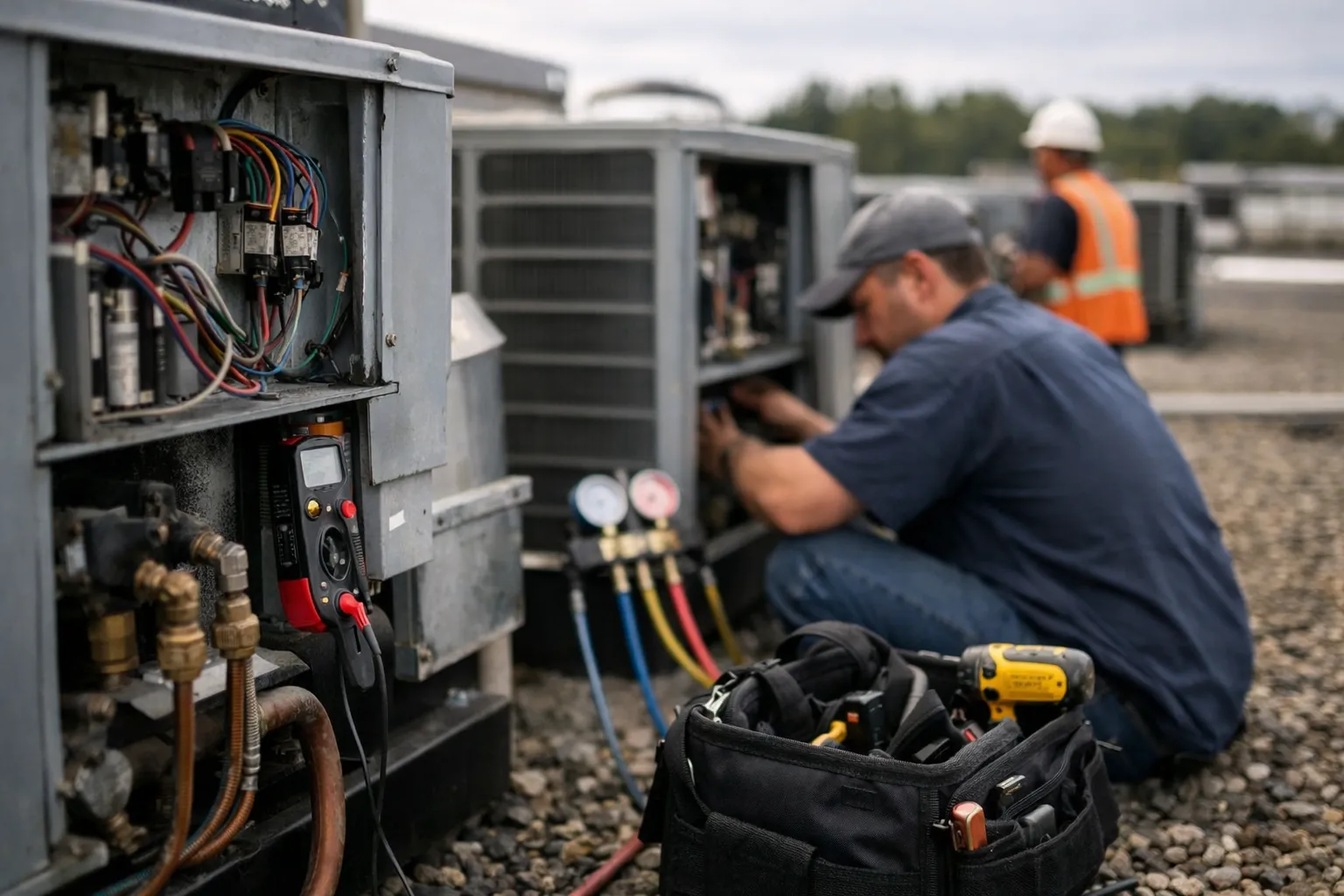
WASHINGTON, D.C. — The U.S. Department of Energy this month awarded the first tranche of grants under its expanded HVAC workforce training initiative, marking a milestone in federal efforts to scale the pool of technicians skilled in heat-pump installation, A2L refrigerant handling and electrification-ready work. The awards — focused on community colleges, labor unions and nonprofit training providers — are intended to address chronic labor shortages and accelerate the industry’s shift away from fossil-fuel heating systems.
What the grants fund
The initial awards target three interlocking needs cited by contractors and industry groups: classroom and lab capacity to teach modern heat-pump systems; standardized, hands-on curricula that include safe handling of low‑GWP refrigerants and A2L risk mitigation; and pathways into apprenticeships and placement programs for high-demand regions.
- New and upgraded training labs: Several recipients will use grant money to build or refurbish HVAC labs with variable‑speed heat-pump units, recovery/reclaim stations and charging rigs compatible with hydrofluoroolefin (HFO) blends and A2L refrigerants.
- Curriculum and instructor development: Grants will fund development of modular courses covering system commissioning, airflow diagnostics, charge‑by‑weight practices and electrification‑related electrical training to bridge HVAC and electrical trades.
- Apprenticeships and employer partnerships: Awardees are required to formalize employer commitments for paid apprenticeships or placement guarantees, linking training outcomes directly to the local contractor market.
Why the timing matters
The awards come as demand for heat pumps and other electric HVAC technologies continues to grow, driven by state and local electrification policies, federal incentives and a steady narrowing of affordable high‑GWP refrigerant supplies. Contractors and distributors have repeatedly cited access to experienced installers as a bottleneck when trying to capitalize on rebate-driven demand.
“Training infrastructure has not kept pace with the rate of electrification,” said an association official familiar with grant applicants. “This first wave of federal funding is targeted where it can quickly change that dynamic: community colleges that can scale, and unions and nonprofits that can put technicians into the field.”
Regional priorities
DOE’s initial awards emphasize regions with the steepest projected growth in electric heating installations and known labor shortages — including parts of the Southeast, Southwest and Mountain West — while also funding programs in legacy HVAC markets that need to upskill existing crews.
The geographic mix reflects two strategic objectives: meet near-term demand for heat‑pump installations in states offering generous consumer rebates, and provide retraining options for technicians transitioning from gas‑fired systems.
Industry reaction and next steps
Manufacturers, distributors and trade associations broadly welcomed the grants but cautioned they are an early step in a longer effort. Several manufacturers said they plan to expand donation or loan‑of‑equipment programs to grant recipients so trainees can learn on brand‑real gear used in the field.
Contractors in markets already seeing accelerated electrification noted practical benefits: more technicians trained in safe A2L practices, better commissioning routines that reduce callbacks, and improved ability to manage hybrid systems that combine electric heat pumps with backup gas or hydronic systems during transition phases.
At the same time, industry leaders stressed remaining gaps. Shortfalls include standardized credentials recognized by employers nationwide, and crossover training between HVAC and electrical code requirements — a recurrent source of permitting delays for retrofits.
What HVAC professionals should do now
- Engage with local training providers. Contractors should contact nearby community colleges and unions to understand enrollment timelines and commit to apprenticeships where possible.
- Prioritize A2L and heat‑pump commissioning training. Employers should require at least one field‑qualified technician per crew before taking on A2L projects.
- Coordinate with suppliers. Distributors can help by making test units and charging kits available for classroom work and sponsoring lab equipment.
- Advocate for credit recognition. Contractors and associations should push for industry‑recognized credentials that travel across state lines and are factored into prevailing‑wage and contracting requirements.
Longer‑term implications
If the initial grants succeed in raising the number of qualified installers, the effects could be systemic: fewer installation errors, faster permit approvals and broader contractor willingness to bid on electrification projects. For building owners, that should translate to faster deployment of incentives and smoother project delivery.
However, analysts warn funding is only one piece of the puzzle. Sustained improvements will require recurring investment in instructor pipelines, employer buy‑in for apprenticeship pay scales that attract trainees, and regulatory alignment so that training competencies meet the code‑enforcement expectations installers face on site.
DOE officials say this initial round is intended as a proof of concept. The department plans to evaluate outcomes — placement rates, employer satisfaction and measurable reductions in installation defects — and expects to make further awards contingent on demonstrable results.
For HVAC professionals, the message is clear: training capacity is growing, and getting connected to these early programs will offer a competitive advantage in a market rapidly shifting toward electric HVAC technologies.