
Overview
Two stalwarts of premium residential cooling—the Carrier Infinity 26 and Trane XV20i—remain the benchmarks for whisper‑quiet, variable‑speed comfort. This November 2026 update focuses on what has shifted since mid‑2026: near‑universal A2L refrigerant adoption on high‑efficiency models, more rigorous dealer certification programs, firmware refinements that materially affect humidity and defrost behavior, and a clearer financial incentive path pushing many buyers toward full heat‑pump electrification.
- Product type: Top‑tier inverter‑driven (variable‑speed) split‑system condensers
- Positioning: Luxury part‑load comfort, low operating noise, improved humidity control when paired with communicating indoor components
- Best matched with: Variable‑speed indoor blower, communicating thermostat, and documented independent commissioning
- Deciding factors (Nov 2026): Exact refrigerant nameplate, dealer A2L credentials and tooling, firmware revision and update policy, local parts stock, and the commissioning scope required to secure promised performance
Background
Carrier and Trane continue to lead the high‑end North American residential market. Following the AIM Act and the SEER2/EER2 test transitions, manufacturers accelerated platform changes. By late 2026, most flagship condensers ship with A2L (low‑GWP, mildly flammable) blends as standard. That transition has shifted the buyer decision away from raw SEER numbers toward system readiness: dealer training, tools, and commissioning discipline now gate actual in‑home performance.
Who this is for: HVAC‑savvy homeowners, designers and installers who demand steady comfort, low sound, precise humidity control and documented long‑term serviceability.
Features Analysis
1) Modulation and part‑load comfort
Both condensers are engineered to operate long at low capacity to reduce short cycling and improve latent removal. In 2026 the practical differentiator is software tuning and system integration. Carrier’s most recent Infinity 26 firmware releases emphasize staged airflow coordination during dehumidify modes; Trane’s firmware updates have prioritized stable low‑speed torque and clearer diagnostic flags that help technicians tune part‑load behavior. In both cases, owners report fewer transient low‑speed surges after recent OTA (over‑the‑air) revisions when units were connected during commissioning.
2) Communicating controls and firmware governance
Firmware management has become an installation deliverable. Manufacturers now publish update cadences and security notes; dealers are expected to deliver a written firmware revision on the commissioning report. For luxury installs insist the dealer will (a) register the unit with the OEM at installation, (b) apply any critical updates discovered during the first 30–90 days of occupancy, and (c) include firmware revision and OTA policy in the written warranty file.
3) Refrigerant reality: A2L, service workflows and regional supply
A2L blends are mainstream for top‑efficiency condensers. That lowers lifecycle climate impact but changes service logistics:
- Require the exact refrigerant name on the written quote and final invoice.
- Insist on proof of dealer A2L training (OEM certificates, NATE+OEM joint programs or documented shop audits).
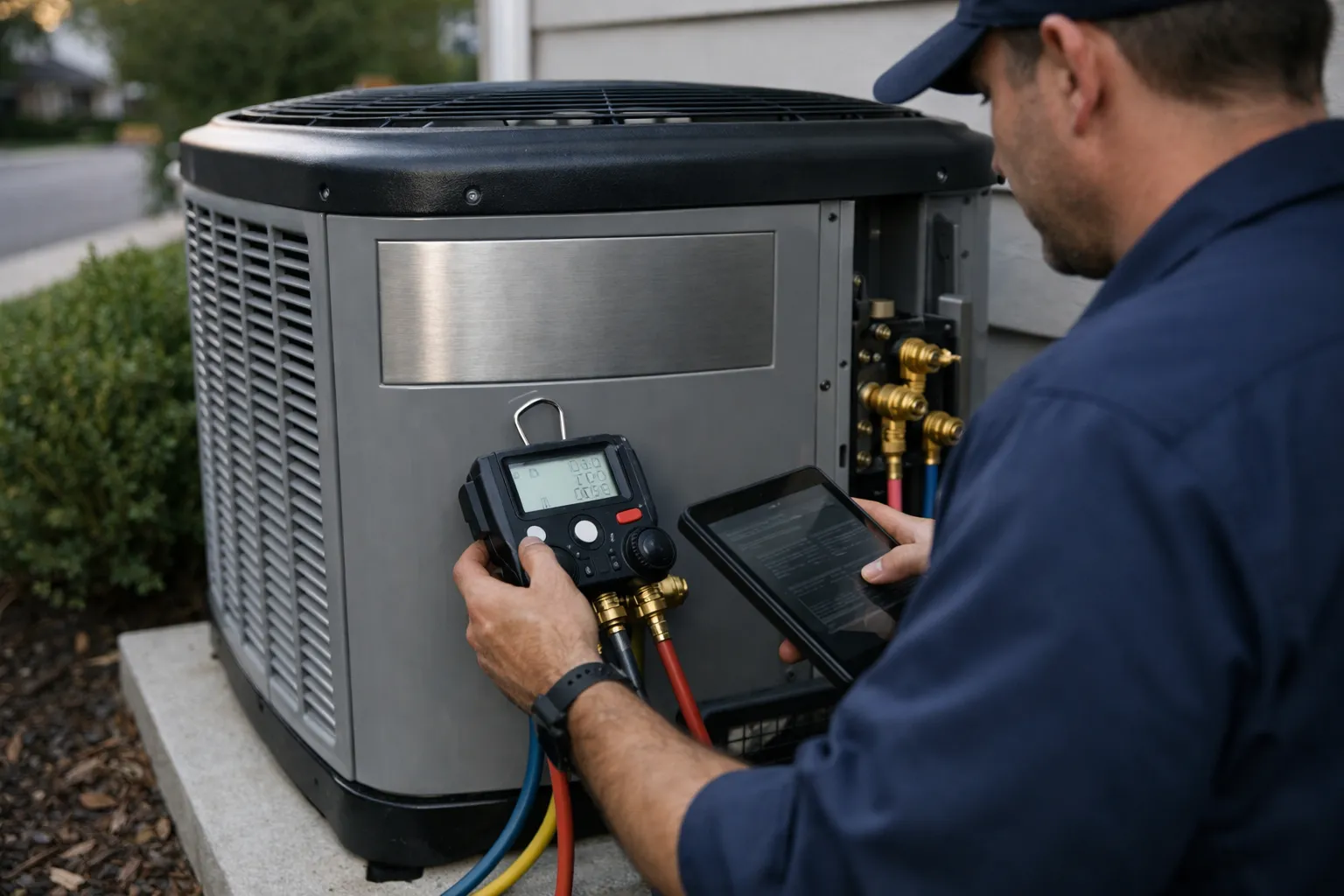
- Confirm A2L‑rated tools: leak detectors, nitrogen regulators, vacuum and charge equipment, and approved recovery or reclamation procedures.
- Ask about on‑hand cylinder supply and regional lead times; urban markets are well stocked, while some rural areas still experience delays for specialty parts.
4) Humidity control, indoor air quality and commissioning
Humidity remains the single most visible comfort differentiator. Carrier’s Infinity ecosystem offers several humidity‑first strategies (dehumidify + airflow staging, integrated whole‑home dehumidifier control); Trane achieves the same objective through tighter diagnostic clarity and field‑tunable control loops. Either brand will underperform if installation lacks a precise Manual J, verified duct leakage rates, measured coil airflow (CFM), and refrigerant charge verification by the OEM‑prescribed method. For high‑end projects, add independent verification: third‑party commissioning reports or blower door/duct blaster results included in the contract.
5) Acoustic performance and siting
On spec sheets both units list comparably low dBA at low speed; in real homes, siting and mounting determine perceived quiet. Insist on pad isolation, anti‑vibration mounting, supported line‑sets and a pre‑installation site plan that avoids sound‑reflective alcoves. Request a night‑time low‑speed demonstration and a recorded dBA reading at the neighbor line if acoustics are a priority.
6) Diagnostics, telemetrics and service models
Cloud‑connected telemetry is more mature and expected. Both OEMs provide dealer portals; the value depends on dealer process. Premier dealers now include a documented remote‑monitoring policy, alert escalation timelines and an annual tuning visit as part of premium service packages. If you want proactive maintenance, contractually require SLA response windows and data‑access permissions for independent consultants if desired.
Pros and Cons
Carrier Infinity 26
- Pros: Best‑in‑class humidity strategies inside the Infinity ecosystem, refined low‑speed modulation with recent firmware improvements, polished user experience when paired with Infinity thermostats and dehumidifiers.
- Cons: Maximum benefit requires a matched Infinity indoor unit and thermostat, plus disciplined commissioning; ensure dealer A2L competency to avoid service delays.
Trane XV20i
- Pros: Robust modulation with field‑centric diagnostics, strong dealer tooling for fault‑finding, and firmware that surfaces actionable maintenance flags.
- Cons: Requires matching Trane communicating indoor components to unlock some features; verify regional parts and refrigerant logistics before purchase.
Pricing / Value (Nov 2026)
Installed pricing continues to vary by market, access and scope of commissioning. Typical premium system installs in November 2026 (condenser + matched coil or air handler, variable‑speed indoor blower, communicating thermostat, comprehensive commissioning report) generally range:
- Carrier Infinity 26 system installs: approximately $15,000–$28,000
- Trane XV20i system installs: approximately $14,500–$27,000
Those ranges assume a straightforward replacement. For projects requiring duct remediation, whole‑home dehumidification, or elevated commissioning (third‑party verification, airtightness fixes), budget upward. At these price points demand specific deliverables: Manual J, AHRI (or OEM) match certificate, measured duct leakage, external static pressure, verified coil airflow (CFM), refrigerant charge documentation (method and final readings), firmware revision and a written labor warranty tied to the commissioning report.
Who It's For
Choose Carrier Infinity 26 if precise humidity control is essential in your climate and you will commit to the Infinity communicating ecosystem with a Carrier‑certified dealer who documents firmware and commissioning.
Choose Trane XV20i if you value diagnostic depth and have access to a Trane specialist who will use telemetrics and field data to tune performance over the first heating and cooling seasons.
Consider a heat pump instead where electrification incentives, climate and running‑cost math favor it. Since 2023 federal and state programs have continued to reward electrification in many regions; verify local tax credits and utility rebates when comparing a cooling‑only condenser to a heat pump.
Alternatives
- Lennox SL28XCV: Comparable modulation and humidity performance with strong efficiency, though dealer coverage can be uneven in some regions.
- Daikin Fit and multi‑split heat‑pump options: Offer compact footprints and flexible siting where yard or noise constraints matter.
- Mitsubishi / Fujitsu ductless heat pumps: Excellent zone control and cold‑climate performance for partial electrification or addition projects.
Verdict
November 2026 verdict: Carrier Infinity 26 and Trane XV20i remain top choices for homeowners seeking “quiet luxury” cooling. The most consequential differences today are dealer readiness for A2L service, firmware governance, and commissioning discipline—not the condenser alone. Buy the installer as much as the unit: insist on nameplate refrigerant disclosure, documented A2L training and tooling, a full commissioning report (including firmware revision), and a dealer commitment to remote monitoring or a clear service SLA. With those protections in place, either system will deliver the steady, effortless comfort discerning homeowners expect.
FAQ
Do I need the brand’s communicating thermostat to get the benefits?
Yes. Full modulation, humidity coordination and diagnostic visibility require a communicating indoor‑outdoor thermostat and compatible air handler. Confirm AHRI (or OEM) match and include the thermostat in the contract scope.
Should I be worried about A2L refrigerants?
Be informed, not alarmed. A2L refrigerants reduce GWP but require specific handling, tools and technician training. Before purchase get the exact refrigerant name on the quote and written proof the dealer is A2L‑certified and carries rated tools.
Will firmware updates change how my system feels?
Yes. Modern inverter systems depend on control software. Firmware updates in 2026 have already smoothed low‑speed behavior and improved dehumidification on both platforms. Require recorded firmware revision on the commissioning report and an explicit OTA/update policy from the dealer.
Is a top‑tier condenser a bad idea if my ducts are old?
Not necessarily, but it may be the least cost‑effective upgrade. Variable‑speed systems are sensitive to airflow and static pressure—address duct leakage and airflow first. Require measured airflow, external static pressure and a duct remediation plan in the proposal.
What should I demand to verify proper commissioning?
At minimum: Manual J load calculation, AHRI or OEM matching documentation, measured duct leakage, external static pressure, verified supply airflow (CFM) at the coil, refrigerant charge verification per manufacturer method, firmware revision recorded, and a commissioning report retained by you.