
Overview
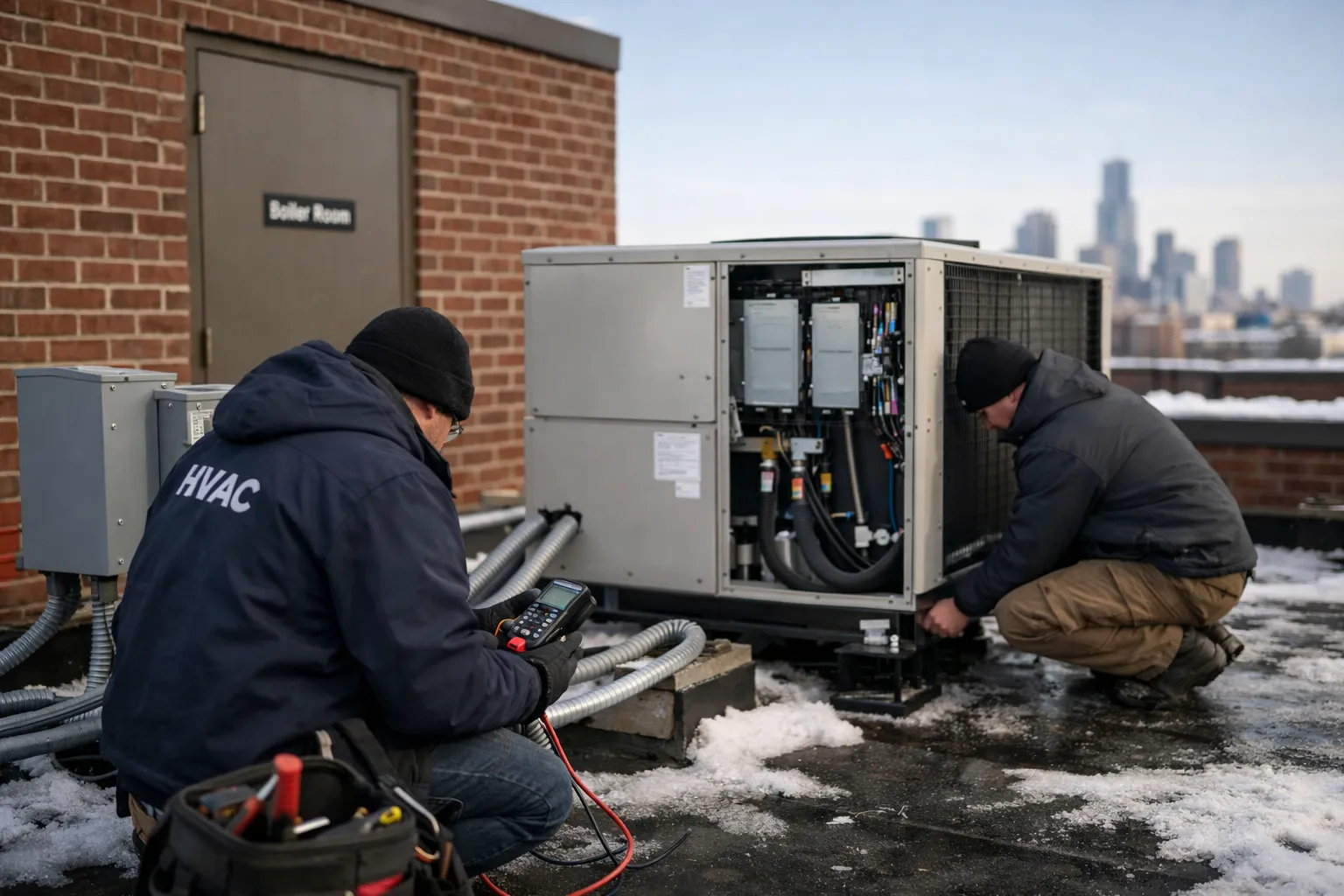
Small commercial owners and HVAC professionals deciding whether to repair a gas boiler or electrify with a cold‑climate air‑source heat pump (ccASHP) face a changed but familiar landscape in August 2026. This update synthesizes the latest market signals—installed cost movement, tariff pilots and utility programs, manufacturer product rollouts, refrigerant and commissioning practices—and gives practical, site‑level steps to improve near‑term return on investment for buildings roughly 1,000–10,000 ft².
Background: why this still matters
Electrifying space and water heating in commercial buildings remains a central decarbonization pathway. Since early 2024 manufacturers improved cold‑ambient performance and the supply chain normalized; since 2025–2026 many utilities moved from demonstration pilots to scaled commercial tariff options for managed electric heating loads. Nevertheless, commercial demand charges and local tariff design continue to be the dominant economic levers that determine whether heat pumps lower operating costs.
Data and evidence: what’s changed by August 2026
Key developments through mid‑2026 that materially affect retrofit decisions:
- Installed costs have edged down but remain site‑sensitive. Industry reporting and contractor surveys through Q2–Q3 2026 show further modest reductions in installed electrification cost compared with mid‑2025. Packaged rooftop ccASHPs and repeatable packaged fan‑coil + outdoor module kits have driven lower soft costs in many metro areas. Typical aggregate installed costs for many small commercial retrofits now more frequently land in the lower to middle portion of previously quoted ranges—local variation remains large because of service‑upgrade needs.
- Field performance and controls are more predictable. Second‑ and third‑generation packaged ccASHP families released 2024–2026 show improved inverter control, better low‑ambient capacity retention, and integrated factory controls. Manufacturers increasingly publish seasonal curves and part‑load capacity data; owners should request the full capacity-by‑temperature and HSPF‑season performance rather than a single COP figure.
- Tariff experimentation moved toward operational programs. In 2026 several utilities expanded commercial pilots into multi‑year tariff options that reduce demand‑charge exposure for customers that commit to telemetry, staged control, or utility dispatch (examples include pilots and filings from Xcel Energy, National Grid and Con Edison). These programs materially change economics for electrification when a building can credibly demonstrate demand management.
- Incentive landscape shifted from rapid growth to targeted funding. Many state and utility rebate programs that accelerated between 2023–2025 moved from open windows to targeted or capacity‑capped offerings in 2026. That makes early program engagement and pre‑approval more important for borderline projects.
- Refrigerant and workforce realities are mainstream. Low‑GWP HFO blends and alternative refrigerants are increasingly specified in new packaged units. Contractor certification and manufacturer commissioning support are now common prerequisites for extended warranties and for meeting utility telemetry requirements.
Across these changes, the central comparison remains: delivered heat cost (¢/kBtu) from a heat pump—using realistic seasonal performance curves and accounting for distribution losses—versus boiler delivered heat. Demand charges and peak coincidence remain decisive.
Multiple perspectives: what industry voices are saying
Conversations with contractors, utilities, energy analysts and manufacturers in 2026 reveal differing priorities and convergent advice:
- Contractors: Field reports emphasize that packaged solutions reduce installation uncertainty; but accurate early electrical scoping and a firm plan for staging/controls are the most common reasons projects stay on budget. Trade associations such as ACCA continue to stress certified refrigerant and controls training.
- Utilities: Program managers point to measurable peak shaving from managed heating pilots when paired with simple thermal storage or staged control. Several utilities now require telemetry and minimum control standards to qualify for preferential commercial tariff rates.
- Energy analysts: Think tanks (for example, Rocky Mountain Institute and ACEEE) continue to show that lifecycle economics for electrification improve with higher fossil fuel prices, lower electricity rates, or when demand‑management strategies are used—findings that remain valid through mid‑2026.
- Manufacturers: OEMs now publish application guides for small commercial packaged ccASHPs and recommend coordinated envelope, distribution, and controls work to achieve expected in‑field COPs.
Updated operating‑cost sensitivity and ROI scenarios
For August 2026 planning, refine financial modeling with these steps:
- Run at least two electricity price scenarios: current contracted tariffs and a plausible 5–10 year escalation path for your market. Include all demand‑charge components, ratchet clauses and time‑of‑use differentials.
- Model hybrid operation: many successful retrofits use heat pumps for base and shoulder seasons and the boiler only for extreme cold. Hybrid control strategies can reduce initial electrical upgrade scope and lower demand‑charge exposure.
- Include incentive timing and capacity caps. Because several programs moved to capacity‑limited windows in 2026, projects that wait for invoices may miss funding that turns a marginal proposal into an attractive investment.
- Explicitly model tariff alternatives. Where utilities offer reduced demand charges for customers that deploy staged controls or enroll in dispatch programs, include the conditions and any penalties for non‑performance.
Illustrative outcomes (site‑specific modeling required): where contracted electricity is below ~0.20 $/kWh and commercial gas exceeds ~1.00–1.20 $/therm, full‑electrification projects with meaningful incentives and demand management commonly show simple paybacks in the mid‑single‑digit to low‑double‑digit years. In markets with electricity >0.25 $/kWh and high demand charges, hybrid approaches, controls upgrades, or delaying full conversion until tariff terms improve remain prudent.
Service, maintenance and contractor implications—what’s new in 2026
- Telemetry and commissioning are baseline expectations. Utilities and manufacturers increasingly tie extended warranties and preferential tariffs to documented commissioning and remote telemetry. Proposals should include commissioning scope, controls verification and a plan for ongoing remote‑monitoring service.
- Parts availability and refrigerant transitions. OEMs expanded parts and warranty programs for packaged ccASHPs, but contractor certification for new refrigerants is commonly required. Factor commissioning and recertification costs into lifecycle proposals.
Grid and tariff considerations: actionable steps for August 2026
- Obtain 12–24 months of interval demand + energy data from the utility immediately. If the utility provides only aggregated data, request interval or SCADA‑grade exports for accurate demand modeling.
- Model the building’s coincident peaks against the utility’s system peaks and test demand‑management measures in the model: staggered equipment start, soft start VFDs, modest battery or thermal storage, and pre‑cool/heat strategies.
- Engage the utility early to confirm available electrification tariffs, pilot enrollment rules, and telemetry requirements. Ask specifically about penalties and performance verification steps that could affect savings.
Refined retrofit strategies that improve outcomes
August 2026 successful retrofits typically follow one or more of these patterns:
- Hybrid first, full electrification later: Deploy ccASHPs for base load and retain boilers for peak days. This reduces near‑term electrical upgrade costs and keeps owner comfort risk low while operators gain experience with controls and tariffs.
- Controls‑led electrification: Prioritize demand‑limiting controls, optimized setpoints, and enrollment readiness before upsizing to larger equipment—often avoids or delays transformer upgrades.
- Envelope and distribution matching: Lowering peak load through modest envelope work or redistributing heat via fan coils allows smaller heat pumps to carry the load and keeps CAPEX down.
- Procure packaged solutions: Use factory‑assembled rooftop or matched fan‑coil + outdoor module packages to reduce on‑site labor, commissioning complexity and soft costs.
Decision checklist (August 2026)
- Run a site‑specific lifecycle cost analysis with multiple electricity/gas scenarios and include demand‑charge modeling and escalation assumptions.
- Secure 12–24 months of interval utility data; flag coincident peaks and tariff options.
- Assess hydronic distribution: confirm whether lower supply temperatures or partial distribution upgrades will be needed.
- Design controls and staging early to reduce simultaneous starts and qualify for tariff pilots or reduced demand rates.
- Confirm incentive availability, application deadlines and capacity caps; obtain pre‑approval where required.
- Include commissioning, telemetry and a parts/warranty plan tied to certified installation in the proposal.
Implications for owners and HVAC professionals
Short term: contractors who bundle accurate tariff modeling, documented commissioning and clear hybrid pathways win more retrofit work. Owners who engage utilities early, and prioritize controls and envelope measures, often reduce electrical upgrade scope and improve project ROI.
Medium term: as packaged ccASHP products expand and targeted incentives persist, many small commercial owners should expect electrification to become a mainstream option—provided tariff exposure is managed. In jurisdictions with high commercial electricity and punitive demand charges, hybrid or delayed electrification strategies remain defensible until tariffs evolve.
Outlook: what to watch for in the next 12–18 months
- Published results from multi‑year utility tariff pilots—these will clarify practical demand‑charge alternatives and performance thresholds for commercial buildings.
- Manufacturer roadmaps for cold‑ambient packaged systems and broader adoption of lower‑GWP refrigerants—these affect long‑term service regimes and regulatory compliance.
- Program continuity and funding cadence—rebate windows with capacity caps will determine whether projects that are borderline on economics can be executed in 2026–2027.
- Growth of turnkey packaged offerings that shorten install time and reduce soft costs, continuing to narrow CAPEX gaps with boiler replacements.
Frequently asked questions
Is switching to a cold‑climate heat pump still more expensive up front than a boiler replacement?
Usually yes. Electrification still often has higher upfront equipment and electrical‑upgrade costs than like‑for‑like boiler replacement. However, packaged solutions, continued installed‑cost reductions through 2026, and targeted rebates or tariff credits can reduce that premium. Always include likely incentives and electrical upgrade scope in a site‑specific quote.
How do demand charges affect whether an electrification project makes sense?
Demand charges are frequently decisive. High demand charges can eliminate operating‑cost savings from heat pumps by penalizing peak electrical draws. Successful projects explicitly model demand charges, test demand‑management measures (staging, thermal/battery storage, soft start) and, when available, enroll in utility tariff options that reduce demand exposure for managed loads.
Can I electrify without replacing the hydronic distribution system?
Sometimes. If the existing hydronic system can operate effectively at lower supply temperatures and the building’s loads are moderate, a heat‑pump‑friendly hydronic conversion can work. In many other cases, partial distribution upgrades or targeted fan‑coil installations are required. A distribution assessment early in the design process is essential.
What should contractors include in proposals to reduce owner risk?
Include multi‑scenario lifecycle cost modeling (with and without demand charges), an electrical scoping contingency, a clear commissioning and telemetry plan tied to warranty, and an incentive capture plan. Offering a hybrid pathway or staged deployment reduces owner risk while preserving the option to fully electrify later.
Sources & further reading: industry reports and filings from organizations and utilities including Rocky Mountain Institute (RMI), ACEEE, AHRI shipment data, ACCA training guidance, ASHRAE refrigerant guidance, and utility tariff filings (examples: Xcel Energy, National Grid, Con Edison). Because programs and tariffs change rapidly, verify local rates and program rules before final decisions.
Disclaimer: Market conditions, utility tariffs and incentive programs change frequently. Use this August 2026 update as a practical framework; verify local rates, program rules and manufacturer performance curves before final decisions. For technical safety questions about refrigerants, combustion appliance removal, or code compliance, consult licensed contractors and relevant code authorities.