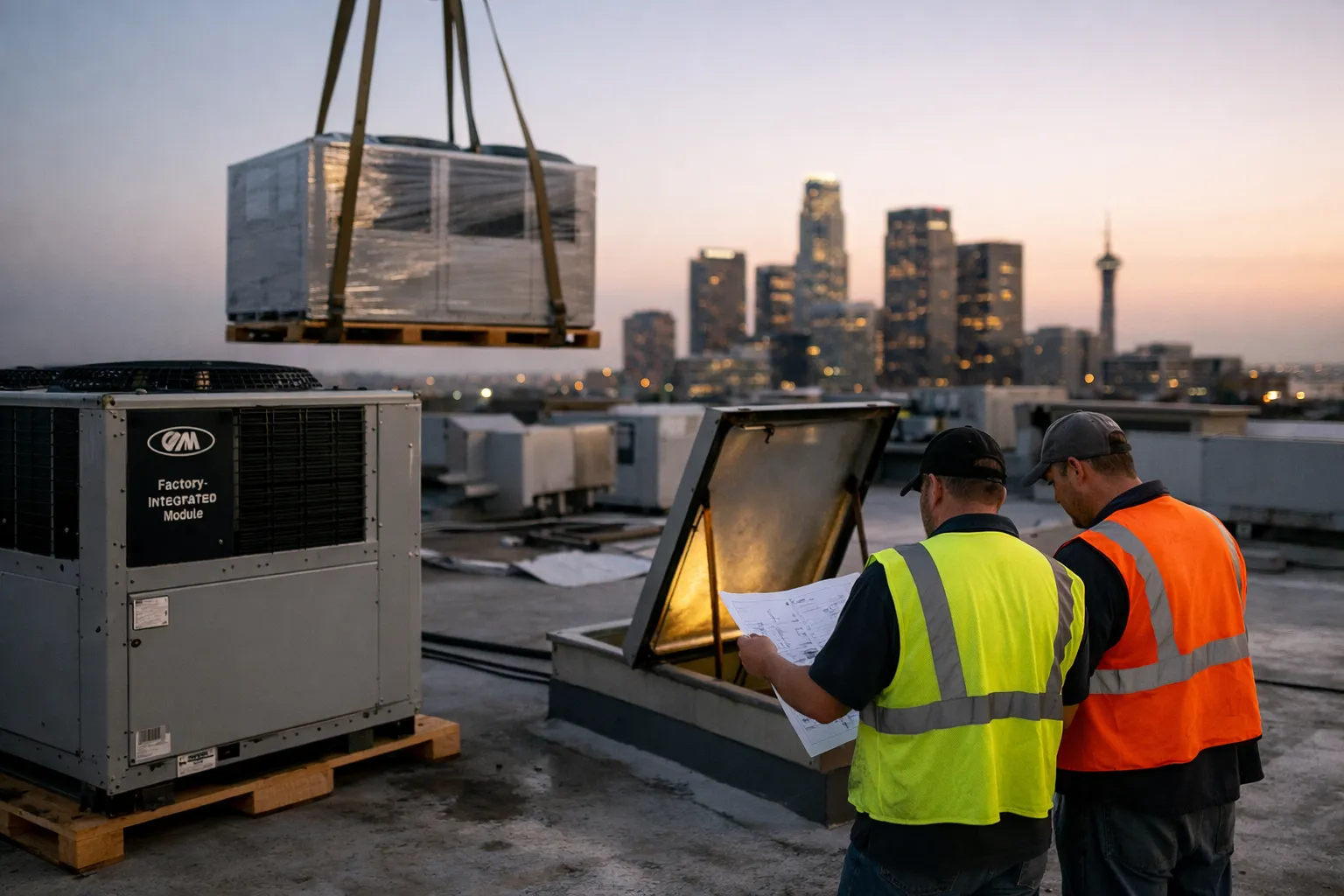
Federal and state electrification incentives that have been building since 2022 reached a tipping point in 2026, producing a noticeable surge in commercial rooftop heat pump purchases. The influx of rebate-backed projects — from school districts to retail chains and multi-tenant office buildings — is reshaping procurement timelines, supply-chain footprints, and contractor training requirements across the HVAC industry.
Why 2026 feels different
The policy drivers are familiar: federal tax credits and rebate programs introduced since 2022 to accelerate building electrification, complemented by expanded state- and utility-level incentive pools, are lowering first-cost barriers for building owners. What changed in 2026 is scale and timing. Several large commercial rebate solicitations and expanded funding windows opened this year, prompting owners to move projects forward now to capture available funds.
That concentrated demand has several downstream effects:
- OEM order books lengthen as buyers lock in units to qualify for rebates and incentives tied to installation dates.
- Supply-chain pinch points appear on long‑lead components such as scroll compressors, specialty controls, and A2L-capable components.
- Contractors and service organizations face a rush for electrification-capable labor, commissioning resources, and refrigerant-handling certifications.
Manufacturers respond — capacity and product strategy
In reaction to the uptake, manufacturers are pursuing a mix of near-term and strategic moves. Near term, several large OEMs have prioritized production of commercial heat pump platforms over other product lines and are offering staggered shipment schedules to match project timelines. Strategically, manufacturers are accelerating investments in modular rooftop architectures that simplify field electrification and minimize on-site refrigerant work.
Two clear product trends are evident:
- Modular designs and sub-packaged heat pump arrays that allow owners to stage capacity additions and simplify rooftop rigging.
- Pre-charged factory modules and larger carrier systems designed to minimize field refrigerant work and reduce the need for A3/A2L refrigerant handling on rooftops.
Supply-chain friction points
Industry stakeholders report bottlenecks on specific bill-of-material items. High-demand components include variable-speed compressors, custom control boards, and certified controls for grid-interactive operation. Freight and logistics also matter: rooftops often need specific crane windows and tight scheduling, and extended lead times for cranes and specialty installers are now common in hot markets.
For projects relying on rebates with strict timelines, these logistics issues convert into financial risk: missed incentive windows, delayed occupancy, and temporary reliance on fossil-fuel systems while electrification work completes.
Workforce and commissioning pressure
The electrification wave is raising contractor and commissioning pressures in three areas:
- Installation skillsets — technicians must be proficient with high-voltage electric heat pumps, power-side coordination with utilities, and new controls architectures.
- Flammable refrigerant preparedness — as low‑GWP options proliferate, training and documented safety procedures for A2L refrigerants are increasingly part of project scopes.
- Commissioning and performance verification — rebate programs frequently require measured performance reporting, which increases demand for commissioning agents and data-capable controls.
What owners and contractors can do now
To navigate the 2026 surge, experienced owners and contractors are adopting several pragmatic strategies:
- Front-load procurement: place order deposits early in the rebate application process to secure production slots.
- Specify factory-integrated modules where possible to reduce field complexity and refrigerant handling on rooftops.
- Lock in commissioning and crane coordination at contract award to avoid secondary scheduling delays.
- Prioritize contractors with documented electrification and A2L handling credentials; include training and supervision requirements in scopes.
- Design for staged deployment — use modular systems or split arrays to align capacity installations with rebate timing and cash flow.
Near-term market signals to watch
For HVAC professionals tracking how this trend evolves, three markers will be meaningful over the next 6–12 months:
- Lead-time stabilization — whether OEMs and suppliers add capacity enough to bring commercial heat pump lead times back to pre-surge levels.
- Rebate program extensions or new rounds — states and utilities that replenish or extend incentive funds will sustain demand; conversely, program closures will create execution risk for late projects.
- Standards and permitting updates — jurisdictions that streamline permitting for rooftop electrification and A2L refrigerants will accelerate installations and reduce soft costs.
Bottom line
The confluence of federal and state electrification incentives in 2026 is a market accelerator for commercial rooftop heat pumps. That acceleration is healthy for decarbonization goals, but it has introduced short-term operational stresses: stretched lead times, concentrated demand for trained labor, and logistics complexity around rooftop deployment. HVAC firms that proactively manage procurement timing, embrace modular product strategies, and invest in technician training will be best positioned to turn rebate-driven demand into successful, high-performance electrification projects.