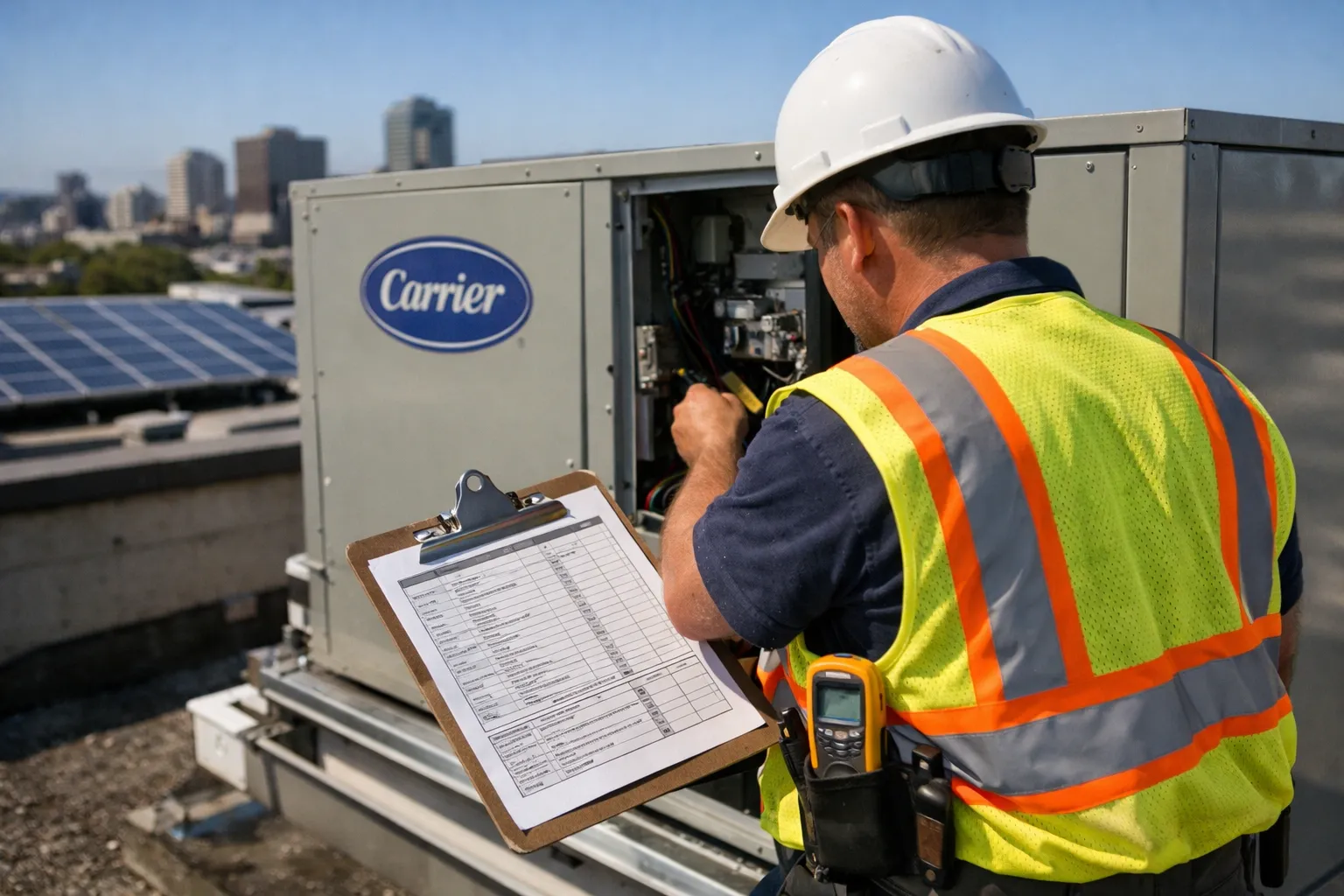
Washington, July 2026 — The U.S. Treasury Department and Internal Revenue Service's April 2026 guidance on Inflation Reduction Act (IRA) tax incentives remains the governing federal interpretation for commercial electrification—most relevantly, heat‑pump retrofits in commercial buildings. The April guidance clarified when owners and contractors can "stack" multiple federal incentives, how prevailing‑wage and apprenticeship bonuses are documented, and which heat‑pump equipment metrics qualify. As of July 2026, industry implementation efforts, manufacturer verification templates, and financing adjustments have begun to make the guidance operational for project teams.
Why the April 2026 guidance still matters — and what's new in July
The April 2026 Treasury/IRS guidance answered core questions: whether the same installed equipment can underpin multiple federal credits, what thresholds and efficiency metrics apply, and what substantiation the IRS expects. That guidance remains the the primary administrative text. Since April, stakeholders have focused on turning those rules into processes.
- Industry toolkits and templates: Trade groups and several major equipment manufacturers have issued implementation checklists and spec‑sheet templates to help installers demonstrate compliance with the IRS's equipment definitions and performance thresholds.
- Contract and finance updates: Project contracts and third‑party financing offers (including C‑PACE and specialized retrofit lenders) increasingly include explicit language on credit transfer elections and ownership of tax attributes.
- Operational changes in the field: HVAC contractors report adding payroll and apprenticeship verification steps to projects when owners elect to pursue bonus credits tied to prevailing wage/apprenticeship compliance.
Updated, practical details contractors need now
Use the April guidance as the legal baseline, then apply these July 2026 operational updates to reduce audit risk and speed project close.
1. Equipment eligibility — checklists are replacing guesswork
The IRS clarified that qualifying commercial heat pumps must meet specific capacity and seasonal‑efficiency metrics (the guidance ties to commonly used performance metrics such as COP and seasonal equivalents). Practically, contractors should collect a three‑part equipment packet at install:
- Manufacturer specification sheet showing rated capacity and seasonal efficiency;
- Factory certification or third‑party lab report when available; and
- Installer affidavit confirming the model and serial numbers actually installed.
Several manufacturers now provide an industry‑standard verification template that aligns their spec sheets to the IRS definitions; ask your rep for that file and save a timestamped copy to the project folder.
2. Prevailing wage and apprenticeship — embed compliance into payroll
The guidance states that meeting prevailing‑wage and registered‑apprentice requirements can increase credit eligibility. Since April, contractors have taken three concrete steps:
- Integrate job‑level payroll reporting in the project management workflow so that hours and classifications are auditable;
- Require subcontractors to supply certified payrolls and apprenticeship confirmations before milestone payments; and
- Keep apprenticeship enrollment confirmations and journey‑worker certifications in the project compliance binder.
3. Stacking limits and state incentives — plan to coordinate
The IRS permits certain federal credits to be claimed concurrently but prohibits “double‑dipping” for identical project components. That means state and utility incentives typically remain stackable, but documentation must show how federal support is not duplicative. Best practice in July 2026:
- Map each dollar of incentive to a specific scope line item (equipment, labor, commissioning) in the contract;
- Obtain a written allocation from any utility or state program you rely on; and
- Coordinate with the owner’s tax advisor before executing transfer elections or electing direct pay.
4. Transfers and direct pay — timing matters
The April guidance outlined procedures for transferring credits to unrelated taxpayers and for direct pay elections where available. In practice, owners and contractors should decide on transfer or direct pay well before year‑end tax filings. Key timing points:
- Document the credit election decision in the initial project financing term sheet;
- Capture ownership language in your construction contract (who will claim the credit, who will sign the transfer election); and
- Coordinate the election with whoever prepares the owner’s federal return—these elections affect filing timing and disclosure.
Real‑world examples and emerging patterns (July 2026)
Since the April guidance, HVAC contractors across markets report five consistent patterns:
- Manufacturers and third parties now commonly produce IRS‑aligned verification templates that accelerate underwriting.
- Owners are requesting credit‑allocation clauses in RFPs—developers want to know which party retains tax attributes before bid submission.
- Finance partners (including C‑PACE administrators and retrofit lenders) expect contractors to deliver a compliance binder at closing.
- Field staff training on certified payroll and timekeeping is becoming a competitive differentiator among contractors.
- Audits are on industry radar: companies that prepared robust documentation early report fewer lender questions during underwriting.
Impact — who benefits and what to watch
Building owners, commercial contractors, HVAC manufacturers, and retrofit financiers stand to gain from clarified credit mechanics—faster project approvals, clearer economics, and more predictable incentive capture. The immediate risk is execution: failure to maintain proper payroll and equipment documentation can forfeit bonus credits or trigger recapture during audit.
Industry reaction
Trade groups including the Air‑Conditioning, Heating, and Refrigeration Institute (AHRI) and major manufacturer channels told HVAC System Guide that the April guidance reduced legal ambiguity and that the sector’s next priority is consistent administrative forms from Treasury/IRS to operationalize transfer and direct‑pay elections. State program administrators—such as NYSERDA in New York and the California Energy Commission—are updating their guidance to ensure state incentives align with federal stacking rules.
What to watch next (July–December 2026)
- Treasury/IRS administrative forms and e‑filing instructions for credit transfers and direct pay — these will convert policy into process.
- Manufacturer and third‑party verification templates becoming standardized across product lines — request them during procurement.
- IRS audit guidance or examples showing acceptable formats for affidavits, payroll records, and installation evidence.
Practical checklist for project teams — start now
- Request IRS‑aligned verification templates from equipment vendors at bid stage.
- Build a project compliance binder: spec sheets, serial numbers, signed installer affidavits, payroll, apprenticeship records, and incentive allocation letters.
- Include credit‑ownership and transfer election clauses in contracts and financing term sheets.
- Train payroll and site supervisors on certified payroll and timestamped installation records.
- Coordinate tax‑election timing with the building owner’s CPA before project close.
Frequently asked questions
Can a single heat‑pump unit support both a federal energy‑property credit and a commercial clean energy credit?
Yes—subject to the April 2026 IRS guidance and specific anti‑double‑dipping limits. You must allocate which credit applies to which portion of the installed asset or demonstrate that the credits relate to different tax provisions. Document performance metrics and the allocation in the contract to reduce audit risk.
What records does the IRS expect to see for prevailing‑wage and apprenticeship bonuses?
Retain certified payrolls with job classifications, time‑stamped crew logs, apprenticeship enrollment confirmations for named trainees, and subcontractor payrolls. Keep these records in a searchable compliance binder linked to the project and to the tax election decision.
When should owners elect credit transfer or direct pay?
Decide before filing tax returns for the year in which the project is placed in service. Make the election in coordination with the owner’s tax advisor and reflect the decision in project contracts and financing documents early in the deal timeline.
Will state incentives interfere with claiming federal credits?
Usually state and utility incentives remain stackable, but you must show the incentives are not duplicative of the same federal support. Obtain written allocation statements from state or utility program administrators and align those allocations with contract line items.
What should contractors change in their standard workflow right away?
Start requiring manufacturer verification templates at procurement, add certified‑payroll capture to project close procedures, include credit‑ownership clauses in contracts, and train field supervisors on documentation practices that preserve bonus credit eligibility.
For HVAC professionals, the bottom line in July 2026 is this: the April Treasury/IRS guidance significantly improved legal clarity; the practical work now falls to contractors, owners, and manufacturers to build compliant workflows. Firms that embed verification, payroll, and contract language now will shorten sales cycles, reduce financing friction, and be best positioned to capture IRA‑driven incentive dollars through 2027 and beyond.