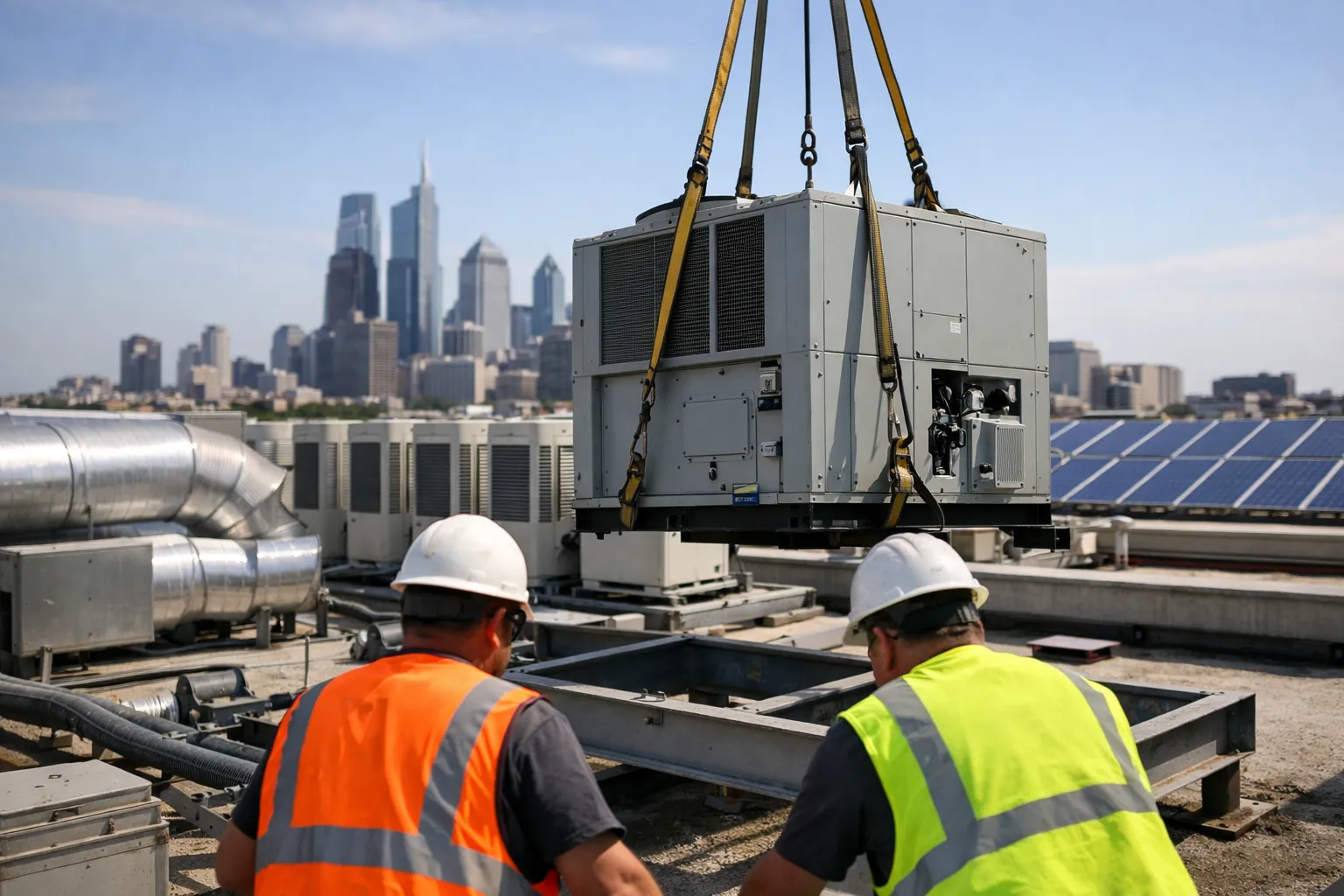
As building owners and engineers wrestle with near‑term decarbonization targets, the question of which electrification path to choose for commercial HVAC—variable refrigerant flow (VRF) systems, electric chiller retrofits, or hybrid gas‑electric solutions—has moved from academic debate to boardroom decision. Between 2023 and 2026 market shifts (incentives, equipment availability and evolving utility rates), the optimal choice has grown more context‑sensitive. This analysis compares lifecycle carbon, first‑cost and operating cost implications across realistic retrofit scenarios and identifies where each pathway performs best.
Why a comparative analysis matters now
Three concurrent dynamics make this timely:
- Municipal and state electrification policies and building performance standards (BPS) are accelerating compliance timelines in major U.S. cities, raising demand for electrified HVAC options.
- Incentive programs (federal tax credits, 2023–2026 utility decarbonization programs) have narrowed first‑cost gaps but remain uneven geographically and by technology.
- Grid decarbonization is progressing, but regional differences in marginal grid carbon intensity matter greatly to lifecycle emissions from electric HVAC.
Method and scenarios
This analysis uses comparative scenario modeling rather than a single case study. We evaluate three representative retrofit pathways for an existing mid‑rise commercial office (60,000 ft²; typical peak cooling ~250–350 tons, diverse zone loads):
- VRF heat‑pump system with zonal controls and modest envelope upgrades.
- Electric chiller (air‑cooled or water‑cooled variable‑speed chillers) replacing an old centrifugal/cooling tower plant, keeping or upgrading distribution pumps and AHUs.
- Hybrid gas‑electric system: gas boiler for peak heating and electric heat pumps for base load cooling/heating, with control logic to minimize gas runtime.
Key metrics: lifecycle operational CO2 emissions (20‑year horizon), simple payback on incremental capital, and sensitivity to three grid marginal carbon intensities: low (0.20 kgCO2/kWh), medium (0.40 kgCO2/kWh), and high (0.60 kgCO2/kWh). Estimates use conservative coefficient of performance (COP) seasonal averages: VRF COP ~3.2–4.0 (heating/cooling season dependent), electric chillers full‑plant seasonal efficiency ranging 4–6 kW/ton‑hr (COP ≈ 2.9–4.4) depending on water vs air‑cooled and VFD staging. Hybrid systems assume staged control and gas condensing boiler efficiencies ≈ 92% when in use.
Lifecycle carbon: what the scenarios show
Results are sensitive to grid carbon intensity and seasonal performance:
- Low‑carbon grid (0.20 kgCO2/kWh): Fully electric pathways (VRF or electric chiller) reduce operational CO2 by 60–80% versus gas‑dominant legacy systems. VRF typically has lower lifecycle carbon than centralized electric chillers because higher distribution losses and pump energy in chiller plants increase electrical consumption, especially at part‑load.
- Medium grid (0.40 kgCO2/kWh): VRF still often yields the lowest lifecycle CO2, but the margin versus electric chillers narrows. Hybrid systems can achieve comparable emissions to full electrification if control logic minimizes boiler runtime and if the heating season is moderate.
- High grid (0.60 kgCO2/kWh): The carbon advantage of electrification declines. VRF can still beat central electric chillers because of superior part‑load efficiency, but both electrified options may emit more than optimized hybrid systems that keep high‑efficiency gas boilers for the coldest hours—unless the owner commits to procure low‑carbon or time‑matched renewable energy.
Takeaway: VRF is the most robust low‑carbon performer across a range of grid intensities, particularly for decentralized or multi‑tenant buildings where zone control reduces overconditioning. Electric chillers are competitive in regions with low‑carbon grids or where large central plants benefit from economies of scale and advanced controls.
Capital and operating cost tradeoffs
Upfront costs and lifecycle economics depend on building specifics and incentive availability.
- VRF: Typically higher per‑ton equipment cost than conventional packaged rooftop units, but lower distribution changeover cost in retrofit scenarios (ductwork reduction, easier zoning). Incentives for heat pumps have reduced incremental cost in many markets since 2023, improving paybacks to the 5–12 year range in high‑energy‑cost regions.
- Electric chillers: Can be cost‑effective when a central plant is already present and chilled water distribution exists. Replacing an old centrifugal unit with a new variable‑speed chiller often has shorter payback than full VRF replacement if central plant auxiliary and distribution systems remain efficient.
- Hybrid: Lower incremental capital in many retrofits because it allows staged replacement—electrify first where it yields the best ROI, keep gas for peak. Operating cost savings depend on relative fuel and electricity prices; in regions with cheap winter gas and high electric prices, hybrids can be cheaper to operate short‑term.
Financially, owners should run an energy‑plus‑control retrofit analysis: small envelope improvements and control optimization can materially change which HVAC pathway wins.
Operational and maintenance considerations
Each option presents different O&M profiles:
- VRF: Requires technicians with refrigerant‑system expertise and attention to refrigerant charge and leak detection; multi‑brand interoperability can be an issue in phased projects. Zonal controls reduce tenant complaints but increase systems to commission.
- Electric chillers: Central plants simplify maintenance specialization but demand attention to condenser water chemistry (if water‑cooled) and VFD/pump sequencing. Chiller plant efficiency is highly sensitive to control tuning and part‑load behavior.
- Hybrid: Adds control complexity—optimal savings depend on robust control logic that coordinates heat pumps, boilers and thermal storage (if present). Faults in sequencing can erode expected benefits.
Market dynamics and risk factors in 2026
Three market realities affect selection:
- Incentive variability. Federal and state incentives have cut incremental electrification costs but are patchy. Owners should model scenarios with and without incentives and consider capture deadlines.
- Supply and labor. After 2023–2025 demand surges, supply chains for large‑capacity electric chillers and experienced VRF technicians tightened in some metros through 2026. Lead times and commissioning capacity should influence procurement timing.
- Code and compliance risk. Jurisdictions adopting stringent BPS or electrification mandates may penalize continued fossil use; hybrids offer near‑term mitigation but could require future retrofit to achieve net‑zero targets.
Practical guidance for owners and engineers
- Run a multi‑scenario lifecycle model that includes grid trajectories and utility rate structures. Use sensitivity bands for marginal grid carbon and future fuel prices.
- Prioritize control and building envelope first. Many retrofits capture 20–40% of potential energy savings through controls and low‑cost envelope measures, changing the HVAC sizing and economics.
- Match technology to building typology. VRF excels in multi‑tenant, highly zoned buildings; electric chillers scale better for large, contiguous floorplates with existing chilled water distribution; hybrids are pragmatic where electrification incentives are limited or where winter peak demand is extreme.
- Plan for commissioning and workforce development. Include training and extended commissioning in contracts—controls and sequencing choices drive realized savings.
Conclusion
There is no one‑size‑fits‑all electrification solution in 2026. VRF systems offer a resilient low‑carbon and operationally flexible route for many commercial retrofit projects—especially in regions with moderate to low grid carbon intensity or where zoning and tenant control matter. Central electric chillers remain compelling for large‑scale plants and low‑carbon grids. Hybrid systems, when paired with smart controls and a clear path to full electrification, can be a practical transitional strategy. The smartest investments combine careful lifecycle carbon modeling, rigorous control commissioning, and an explicit plan for future decarbonization as grid emission factors and incentives evolve.